
There is a persistent image problem with apprenticeships in Britain, and it has cost a generation of young people dearly. For decades, the conventional wisdom ran something like this: bright students go to university; everyone else does a trade. That framing was always reductive, often class-tinged, and increasingly disconnected from the reality of the modern labour market. In 2026, it is simply indefensible.
The numbers tell a different story from the one many parents and teachers still repeat at careers evenings. Apprenticeship starts across England exceeded 700,000 in the 2024-25 academic year. Degree apprenticeships — in which an employer pays both a salary and university tuition fees — are now available in everything from aerospace engineering to nursing, software development to solicitor training. The person sitting next to you on the commute may well be completing a master's qualification on full pay, without a penny of student debt to their name. It is time to take this route seriously.
What Apprenticeships Actually Look Like Now
The apprenticeship landscape has changed beyond recognition since the days of the Youth Training Scheme. Modern frameworks are organised into three broad tiers: intermediate (equivalent to five good GCSEs), advanced (A-level equivalent), and higher or degree level (foundation degree up to master's level). It is that final category that has driven much of the recent growth and cultural shift.
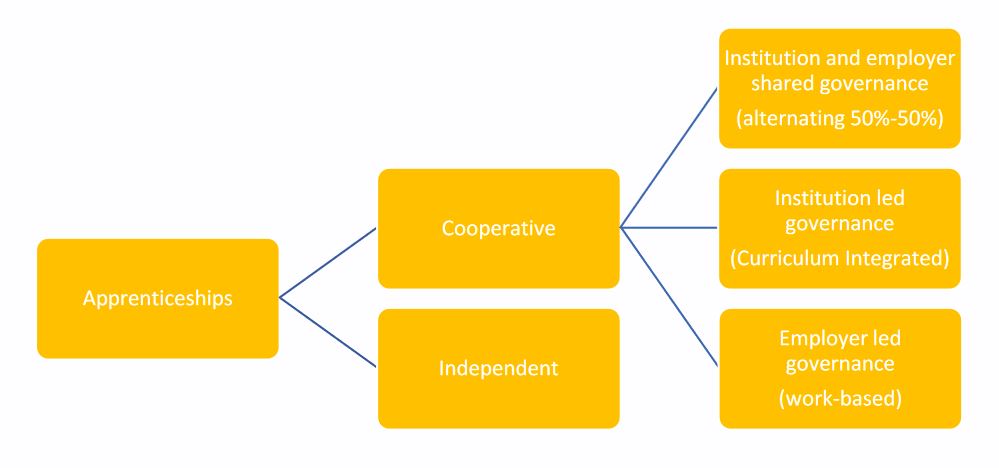
Degree apprenticeships are delivered in partnership between employers and universities, with the curriculum designed around genuine workplace needs. Rolls-Royce engineers its apprenticeship programme in conjunction with leading technical universities. Lloyds Banking Group, PwC, Dyson, the NHS, and scores of public-sector employers now recruit degree apprentices as a core part of their talent pipelines — not as a secondary option, but as a deliberate strategic choice.
The qualification awarded at the end of a degree apprenticeship is, in most cases, indistinguishable from one earned by a full-time undergraduate. The parchment does not say "apprenticeship degree." It says bachelor of engineering, or master of laws, from whichever institution delivered the programme. Employers who once asked about the name of your university now frequently ask whether you completed a degree apprenticeship — because they know what it takes.
The Financial Case Is Overwhelming
Let us be direct about the economics. A student starting a three-year undergraduate degree in England in 2026 will graduate with roughly £45,000 to £55,000 of debt, depending on their living costs. Under the current repayment terms, many graduates will be repaying that loan well into their 40s. Some will never clear it in full before the balance is written off after 40 years — a fact that reveals how financially dubious the investment is for a significant proportion of those who take it.

A degree apprentice in the same period will earn a salary throughout. Entry-level wages for higher apprentices in sectors such as financial services, law, and technology typically sit between £20,000 and £30,000 per year. By the time a university peer graduates, the apprentice will have earned upwards of £75,000 in wages, accumulated three years of workplace experience, built a professional network, and obtained the same qualification — with no debt whatsoever.
Compound that advantage over a career and the figures become stark. Research consistently shows that degree-level apprentices reach senior roles earlier than their traditionally educated counterparts, in part because they have already spent years navigating real organisations rather than academic ones.
It Is Not Just for School Leavers
One of the most significant — and least reported — shifts in apprenticeship culture is the growing number of career changers using the route to retrain. The assumption that apprenticeships are for 18-year-olds is not just outdated; it is factually wrong. There is no upper age limit for apprenticeships in England, and employers in nursing, social work, data science, and cyber security are actively seeking candidates in their 30s and 40s who bring professional maturity alongside a willingness to learn.
Consider the NHS nursing associate and registered nurse degree apprenticeship routes, which have attracted substantial numbers of healthcare support workers seeking to qualify while retaining their income and family stability. Or the solicitor apprenticeship standard introduced by the Solicitors Regulation Authority, which has opened the legal profession to people who could never have contemplated three years of unpaid law school. These are not consolation prizes. They are well-designed, rigorous pathways into respected professions.
For career changers, the apprenticeship model also carries a practical advantage that adult learning courses rarely offer: you are employed throughout. You are not studying in the hope of being hired. You are already hired, already contributing, and already building a track record with an employer who has a direct interest in your success.
What Still Needs to Change
Enthusiasm for apprenticeships should not slide into uncritical boosterism. The system still has genuine weaknesses that deserve honest scrutiny.
Completion rates remain a concern. Roughly half of all apprentices who begin a programme in England do not complete it, a figure that points to problems with employer support, programme quality, and the alignment between what apprentices are promised and what they actually experience in the workplace. An apprentice who spends their off-the-job training time doing menial tasks rather than structured learning is being failed by their employer and, ultimately, by regulators who should be holding those employers to account.
Geographic inequality persists too. Degree apprenticeship opportunities cluster in London, the South East, and major northern cities. A young person in a rural market town or a coastal community may find the practical reality of accessing these programmes far more difficult than the brochures suggest, particularly when employers are hybrid-working policies that assume proximity to a city office.
And the advice gap remains wide. Too many school careers advisers lack the knowledge — or, frankly, the cultural inclination — to present apprenticeships as genuinely equivalent to university. Until the adults guiding young people genuinely believe that, the image problem will persist.
The Honest Verdict
Apprenticeships in 2026 are not a perfect system. But neither, it should be said, is university. The difference is that the flaws of higher education have been absorbed into our cultural assumptions as normal, while the flaws of vocational training are still treated as disqualifying. That double standard has no basis in evidence.
For a school leaver weighing up their options, for a 35-year-old thinking about retraining, for a parent wondering what to encourage: the apprenticeship route, particularly at higher and degree level, deserves to be treated as a first-choice option rather than a fallback. The salary is real. The qualification is real. The debt is not there. That is a proposition worth taking seriously.
Frequently asked questions
Can adults over 25 apply for apprenticeships in the UK?
Yes. There is no upper age limit for apprenticeships in England. Many employers actively recruit career changers and returners, particularly for higher and degree-level programmes in sectors such as healthcare, technology, and financial services.
Do apprentices receive a wage?
All apprentices must be paid at least the National Minimum Wage for their age group, though most employers pay significantly more. Higher and degree apprentices in professional sectors often earn starting salaries comparable to graduate roles.
How do degree apprenticeships differ from traditional university degrees?
Degree apprenticeships combine working for an employer with studying at a university partner. The employer and government fund the tuition fees, meaning the apprentice graduates debt-free. The qualification awarded is identical to a standard degree from the same institution.



Join in — free. Comments on Daily Junction are for members, so real names stay rare and bots stay out.
One field. We email you a 6-digit code — no password needed. Your comment is kept while you do it.
Under 13? You’ll need a parent’s OK first — it takes them one click.