

The Ultimate Guide to the Perfect British Sunday Roast
There are few culinary rituals as deeply embedded in British life as the Sunday roast. It is the meal that pulls families back around the table, fills the house with the smell of roasting meat and caramelised onions, and — if you get it right — reduces even the most reserved guest to outright enthusiasm. Yet for all its apparent simplicity, a truly great Sunday roast requires organisation, patience, and a handful of techniques that separate the good from the genuinely memorable.
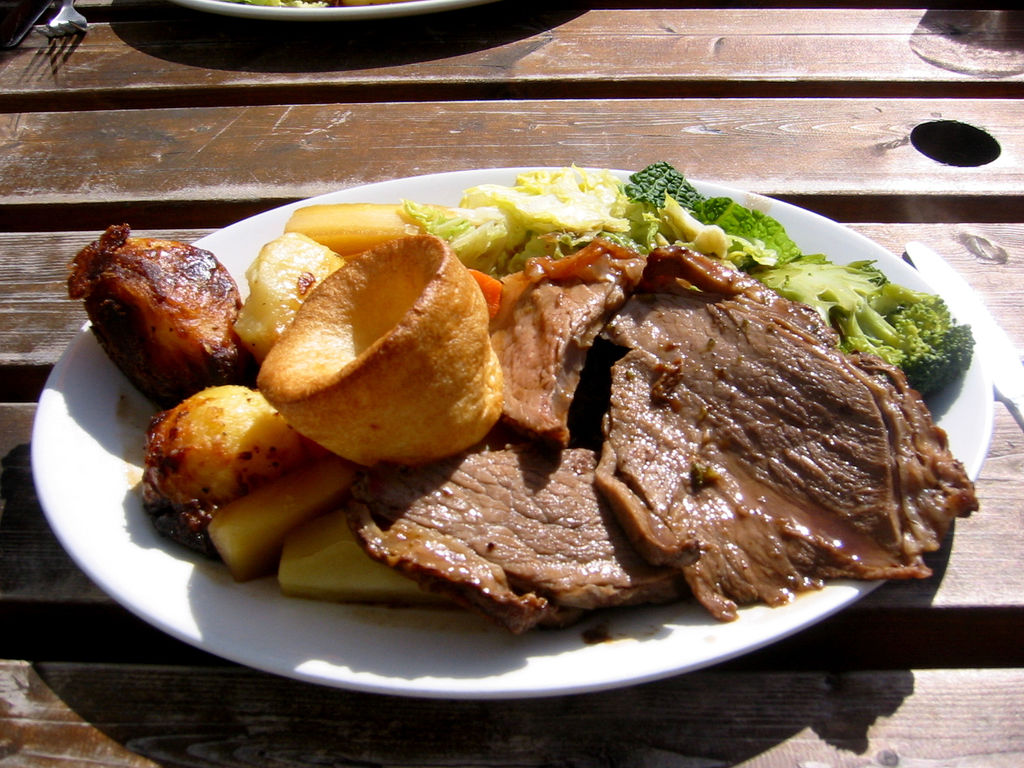
This guide covers everything: a classic roast beef centrepiece, proper roast potatoes, homemade Yorkshire puddings, and a rich, glossy gravy made from the pan drippings. Follow it once and you will not go back.
Ingredients (Serves 4)
For the beef:
- 1.2 kg rolled sirloin or topside joint
- 2 tbsp olive oil
- 1 tsp flaked sea salt
- 1 tsp freshly ground black pepper
- 4 garlic cloves, halved
- 3–4 sprigs fresh thyme
For the roast potatoes:
- 1 kg Maris Piper potatoes, peeled and halved
- 4 tbsp goose fat or vegetable oil
- Flaked sea salt
For the Yorkshire puddings:
- 140 g plain flour
- 4 large eggs
- 200 ml whole milk
- Pinch of salt
- 4 tbsp vegetable oil or beef dripping
For the gravy:
- Pan drippings from the beef
- 1 tbsp plain flour
- 250 ml good-quality beef stock
- 100 ml red wine (optional but recommended)
- Salt and pepper to taste
Method
- Bring the beef to room temperature. Remove the joint from the fridge at least one hour before cooking. Cold meat going into a hot oven is one of the most common mistakes — it leads to uneven cooking and a tougher result.
- Preheat your oven to 220°C (200°C fan / Gas 7). While it heats, rub the joint all over with olive oil, then press in the sea salt, black pepper, and thyme sprigs. Cut small slits across the fat and push in the halved garlic cloves.
- Sear and roast the beef. Place the joint fat-side up in a roasting tin. Roast at 220°C for 20 minutes to develop a deep crust, then reduce the heat to 180°C (160°C fan / Gas 4). For medium-rare, allow 20 minutes per 500 g from this point. A digital meat thermometer is your best friend here — you are aiming for 55–58°C at the centre for medium-rare.
- Parboil the potatoes. While the beef is roasting, bring a large pot of salted water to the boil. Add the potatoes and parboil for 8 minutes until the edges are just beginning to soften. Drain thoroughly, return them to the pot with the lid on, and shake vigorously to rough up the surfaces. Those fluffy edges are what will give you the crunch.
- Roast the potatoes. About 45 minutes before you expect the beef to be ready, put your goose fat or oil into a large roasting tray and place it in the oven for 5 minutes until smoking hot. Carefully add the potatoes, turn them to coat, season generously with salt, and roast for 40–50 minutes, turning halfway, until deeply golden.
- Make the Yorkshire pudding batter. Whisk together the flour, eggs, milk, and a pinch of salt until completely smooth. Leave the batter to rest at room temperature — this is important. Divide the vegetable oil between a 12-hole muffin tin and place it in the oven for 10 minutes until the oil is ferociously hot.
- Cook the Yorkshires. Working quickly, pour the batter evenly between the holes — it should sizzle immediately on contact. Return to the oven for 20–25 minutes without opening the door. They should be tall, golden, and hollow inside.
- Rest the beef. Once the beef reaches temperature, remove it from the oven, tent loosely with foil, and rest for a minimum of 20 minutes. This step is not optional. Resting allows the juices to redistribute throughout the meat, making every slice tender and moist.
- Make the gravy. Skim excess fat from the roasting tin, then place it directly over a medium hob flame. Sprinkle in the flour and stir into the drippings for 1–2 minutes. Pour in the red wine, scraping up any caramelised bits from the bottom, then add the beef stock. Simmer, stirring regularly, until the gravy coats the back of a spoon. Season to taste.
Tips and Variations
Choose the right cut. Topside is leaner and more economical; sirloin is richer and more forgiving for home cooks. Rib of beef — on the bone — is the showstopper choice for a special occasion, though it commands a higher price at the butcher's counter.
Plan your shopping costs. A 1.2 kg topside joint typically costs £10–£14 from a supermarket, with the full meal coming in at roughly £6–£8 per person when you factor in potatoes, vegetables, and pantry staples. If you are feeding a crowd regularly, it is worth comparing supermarket loyalty cards and cashback offers — using a comparison site like QuidCompare can also surface deals on everyday spending accounts and cashback cards that quietly add up over a year of weekly shops.
Swap the meat. Roast chicken — rubbed with butter, lemon, and tarragon — works beautifully with this same method. Lamb leg with anchovy and rosemary is the Easter variation most British households return to year after year.
Make it ahead. The Yorkshire pudding batter keeps in the fridge overnight. The potatoes can be parboiled and refrigerated the evening before. On the day, this transforms a potentially chaotic cook into something almost relaxed.
Do not neglect the vegetables. Honey-roasted parsnips, buttered tenderstem broccoli, and braised red cabbage are all worthy supporting acts. Blanch your greens last, just before serving, so they retain colour and bite.
Cost Per Serving
| Item | Approx. Cost |
|---|---|
| Topside joint (1.2 kg) | £12.00 |
| Maris Piper potatoes (1 kg) | £1.20 |
| Yorkshire pudding ingredients | £1.50 |
| Gravy and aromatics | £1.00 |
| Seasonal vegetables | £3.00 |
| Total for 4 (per head) | ~£4.70–£6.00 |
Prices will vary depending on retailer and region, but a Sunday roast remains one of the most cost-effective ways to feed four people a genuinely satisfying, home-cooked meal.
The Sunday roast is not just a recipe — it is a structure around which the weekend organises itself. Get the fundamentals right, and it becomes one of those meals you look forward to cooking just as much as eating.



Join in — free. Comments on Daily Junction are for members, so real names stay rare and bots stay out.
One field. We email you a 6-digit code — no password needed. Your comment is kept while you do it.
Under 13? You’ll need a parent’s OK first — it takes them one click.