
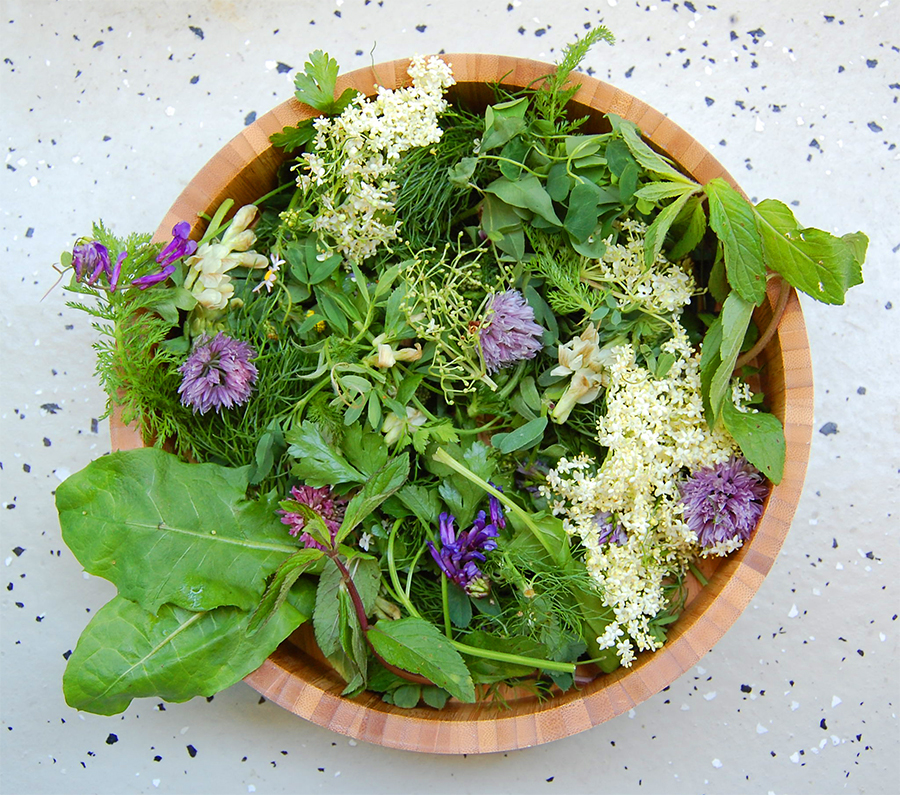
Foraging in the UK: A Beginner's Guide to What's Safe and Seasonal
Walk almost any British footpath in late summer and you will pass blackberries without a second glance. Most people do. Yet those same brambles, plucked warm from the hedgerow on a dry afternoon, represent something increasingly rare in modern life: free, nutritious food that has grown without a supermarket, a delivery van, or a strip of plastic packaging anywhere near it. Foraging — the ancient practice of gathering wild plants, fungi, and fruits — is enjoying a quiet but determined revival across the UK, and not only among country-dwellers. Urban parks, canal towpaths, and scrubland at the edge of housing estates all harbour edible species for those who know what to look for.
The appeal is easy to understand. After decades in which our relationship with food became ever more transactional, more distant from soil and season, there is a growing hunger — literal and otherwise — to reconnect. But enthusiasm without knowledge can be dangerous. Wild food has given us extraordinary flavours; it has also, in careless hands, sent people to hospital. The difference between a rewarding forage and a medical emergency frequently comes down to a single identification feature noticed or missed. This guide is designed to help you start on the right side of that line.
The Law, the Land, and Common Sense
Before you reach for a basket, it is worth understanding the legal framework. Under the Theft Act 1968, picking wild fruit, foliage, fungi, or flowers for personal use is generally permitted in England and Wales, provided you are on land where you have lawful access — public footpaths, common land, and many country parks. The crucial caveat is that this right covers the picking of plants but not their uprooting. Digging up roots or removing an entire plant falls under a different provision and is unlawful without the landowner's permission.
More significantly, the Wildlife and Countryside Act 1981 protects a long list of plant species from being picked at all, on any land. Wild orchids, for instance, are fully protected. Certain fungi, including the spectacular fly agaric in some designations, may be restricted in sensitive sites. If you are in a Site of Special Scientific Interest (SSSI) or a nature reserve, check local bylaws before picking anything, even species that are ordinarily fair game.
A practical rule that experienced foragers repeat like a mantra: take no more than a third of what you find, and never strip a patch bare. This is partly ethical — leaving enough for wildlife and for regeneration — and partly legal, since commercial harvesting without permission is a different matter entirely from a quiet afternoon's personal gathering.
Five Species Every Beginner Should Know
The wisest approach to foraging is to start with a small number of species that are distinctive, abundant, and have no genuinely dangerous lookalikes. Master those before broadening your repertoire.

Blackberries (Rubus fruticosus agg.) ripen from late July through October and are arguably the safest starting point for any novice. Nothing in the British countryside produces a similar fruit on thorny arching canes. Pick from hedgerows well back from roadsides, wash before eating, and use within a day or two.
Wild garlic (Allium ursinum) carpets woodland floors from March to May, filling the air with a scent that is entirely unmistakable. Crush a leaf and if it does not smell powerfully of garlic, put it down immediately — the visual similarity to lily of the valley, which is toxic, makes the smell test non-negotiable. Wild garlic leaves can be used in pesto, soups, and compound butters with spectacular results.
Elderflower (Sambucus nigra) appears in May and June on hedgerow shrubs with distinctive flat-topped creamy-white flower heads. The flowers make one of Britain's finest cordials and are easily identified once you have seen the plant a few times. Avoid elder that grows near roads or industrial land, as it absorbs pollutants readily.
Hawthorn produces both young leaves in spring — nutty and mild, excellent in sandwiches — and scarlet berries in autumn, which make a pleasingly tart jelly. The plant is ubiquitous in British hedgerows and is straightforward to identify by its lobed leaves and fiercely thorned branches.
Sloes (Prunus spinosa) ripen in September and October on blackthorn bushes. Too astringent to eat raw, they are the essential ingredient of sloe gin, a tradition that connects kitchen and countryside in one of the most satisfying ways imaginable. Pick after the first frost — or, if you are impatient, put them in the freezer overnight — to break down the skins.
Fungi: The Tempting and the Treacherous
Mushrooms occupy a special place in the foraging imagination, and a special place in foraging danger statistics. The UK is home to roughly 15,000 species of fungi, the vast majority of which are edible, inedible but harmless, or only mildly toxic. A small number, however, are capable of causing serious illness or death. The death cap (Amanita phalloides) is responsible for the majority of fatal mushroom poisonings in Europe and is responsible for a handful of UK deaths each decade.
This does not mean beginners should avoid fungi entirely. It means they should approach them with methodical rigour. The giant puffball (Calvatia gigantea) is one legitimate beginner's fungus: no lookalikes, unmistakable appearance, and delicious when sliced and fried in butter. Chanterelles have a distinctive egg-yolk colour and forking gills that set them apart from most confusion species.
What beginners must never do is identify a mushroom from a single feature. Colour, smell, habitat, gill structure, stem base, spore print, and season all contribute to a safe identification. Invest in at least two good field guides — Roger Phillips' Mushrooms is a British classic — and if you are serious, join a guided foray led by an experienced mycologist. The British Mycological Society runs events throughout the year and is an invaluable resource.
Eating with the Seasons
One of foraging's most profound gifts is that it forces you into genuine awareness of the calendar. The British landscape does not offer the same thing year-round, and that limitation is, counterintuitively, one of foraging's greatest pleasures.
Spring arrives with nettles, wood sorrel, hawthorn buds, and the first wild garlic. Early summer brings elderflower, then the sweet cicely that flavours fruit crumbles in lieu of sugar. High summer fills the hedgerows with blackberries, raspberries, and the occasional wild strawberry. Autumn is the fungi season, accompanied by sloes, elderberries, crab apples, and hazelnuts. Even winter has its offerings: sea purslane on coastal margins, rosehips that hold long after the leaves have gone, and the dark, flavoursome dried remains of certain bracket fungi.
To eat this way is to eat in alignment with a landscape that has been providing for people on these islands for thousands of years. It is cheaper than a weekly shop, more nutritious than much of what fills supermarket shelves, and — perhaps most importantly — it is a reason to walk out of the door and look closely at the world around you. In that, at least, the case for foraging makes itself.
Frequently asked questions
Do I need a licence to forage in the UK?
No licence is required to forage for personal, non-commercial use on common land or in many public open spaces. However, you must have the landowner's permission on private land, and you should never uproot plants or pick protected species. Local bylaws can also restrict picking in certain nature reserves, so always check before you go.
What is the single most dangerous mistake a beginner forager can make?
Misidentifying a plant — particularly confusing edible species with toxic lookalikes. Wild garlic and three-cornered leek can be mistaken for lily of the valley, which is highly poisonous. Similarly, giant hogweed resembles cow parsley but causes severe chemical burns. Always use multiple identification features and consult a reputable field guide or expert before eating anything you are not absolutely certain about.
When is the best time of year to start foraging in the UK?
Spring is widely considered the ideal entry point. Wild garlic, wood sorrel, and hawthorn buds emerge from March onwards, offering distinctive flavours and relatively easy identification. Summer brings berries and flowers, while autumn is the classic season for fungi, sloes, and nuts. Even winter offers sea purslane and certain mosses for the dedicated forager.



Join in — free. Comments on Daily Junction are for members, so real names stay rare and bots stay out.
One field. We email you a 6-digit code — no password needed. Your comment is kept while you do it.
Under 13? You’ll need a parent’s OK first — it takes them one click.