

Every few years, the United Kingdom holds a general election, and millions of people cast a vote that helps decide who governs the country. Yet the mechanics — what you are actually voting for, how votes turn into seats, and how a government is formed afterwards — are often hazier than they should be. Here is a clear, step-by-step guide to how UK general elections work.
What a general election is
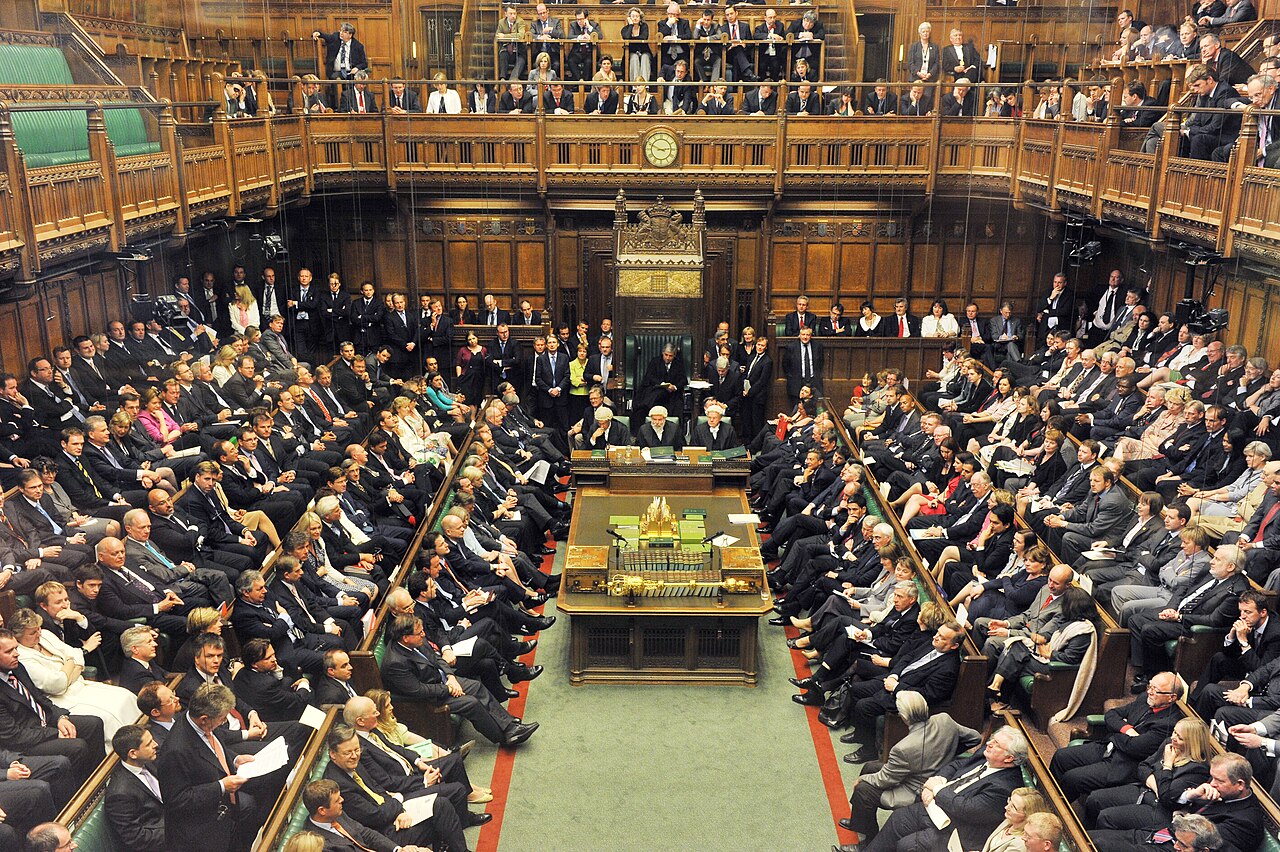
A UK general election is the nationwide vote that fills all 650 seats in the House of Commons, the elected chamber of Parliament. Each seat represents a geographic area called a constituency, and the people elected become Members of Parliament, or MPs.
The result determines which party — or combination of parties — forms the government and who becomes prime minister. General elections must be held at least every five years, though one can be called sooner, with the timing governed by current legislation and the formal process for dissolving Parliament.
It helps to be clear from the outset about one common misunderstanding: you do not vote directly for a prime minister or even for a national party total. You vote for a single local candidate.
Constituencies and your vote
The UK is divided into 650 constituencies, each covering a roughly comparable number of voters. On polling day, voters in each constituency choose between candidates standing to be their MP. Most candidates represent a political party, though some stand as independents.
The practical points for a voter are straightforward:
- You receive a ballot paper listing the candidates standing in your constituency only.
- You mark a single choice — one X next to one candidate.
- The candidate you choose is competing to represent your local area in the Commons.
So a vote is, formally, a vote for a person to be your MP. The national outcome is the sum of 650 separate local contests. Sorting genuine information from spin during a campaign is its own skill, which is why knowing how to spot misinformation matters at election time.
First-past-the-post: how votes become seats
The UK uses a voting system called first-past-the-post (FPTP). The rule is simple:
In each constituency, the candidate with the most votes wins the seat — even if they receive fewer than half of all the votes cast. There is no run-off and no second round.
An example makes it clear. Suppose three candidates split the vote like this:
| Candidate | Votes | Share |
|---|---|---|
| Candidate A | 18,000 | 40% |
| Candidate B | 16,000 | 36% |
| Candidate C | 11,000 | 24% |
Candidate A wins the seat with 40% of the vote, even though 60% of voters chose someone else. The votes for B and C do not carry over; the winner simply needs more than any single rival.
FPTP is praised for being simple, producing a clear local representative, and often delivering decisive national majorities. It is criticised because a party's share of seats can differ sharply from its share of the national vote, and because votes for losing candidates do not translate into representation. Debates about changing the system are a recurring feature of UK politics, sometimes settled or reopened through a national referendum.
How a government is formed
Winning the election is about commanding the House of Commons. After the votes are counted:
- Seats are tallied. Each party adds up the constituencies it has won.
- A majority is the goal. With 650 seats, a working majority requires more than half — in practice, around 326, though the exact figure can be lower because not every MP votes.
- The largest viable party forms a government. The party that can command the "confidence" of the Commons — meaning it can win key votes — forms the government.
- The leader becomes prime minister. The monarch formally invites the leader of that party to become prime minister and form a government.
The prime minister then appoints ministers, who run government departments, and the largest party not in government becomes the official Opposition. The day-to-day work of governing, from legislation to budgets, flows through this structure. The economic levers a new government inherits, such as what central banks do on interest rates, sit largely outside its direct control.
Hung parliaments and coalitions
Sometimes no single party wins more than half the seats. This is called a hung parliament, and it leads to one of a few outcomes:
- A coalition. Two or more parties formally join together, sharing ministerial posts, to command a majority between them.
- A confidence-and-supply arrangement. A smaller party agrees to support a larger one on key votes without formally joining the government.
- A minority government. The largest party governs alone, negotiating support vote by vote.
These arrangements require negotiation and can be less stable than a single-party majority, but they are a normal democratic outcome when voters do not hand any party a clear win.
The wider system
A general election fills the Commons, but it sits within a larger constitutional picture. The UK Parliament also includes the House of Lords, which scrutinises and revises legislation but is not elected at a general election. And not all power is held centrally: many decisions are made by the devolved administrations, a structure explained in how devolution works in the UK.
For the authoritative rules — registering to vote, how Parliament is dissolved and how results are administered — the definitive sources are the UK government and Parliament themselves, published at GOV.UK and the UK Parliament website.
The bottom line
A UK general election fills all 650 seats in the House of Commons, one per constituency, using first-past-the-post: the candidate with the most votes in each area wins. You vote for a local candidate, not directly for a prime minister. The party that can command the confidence of the Commons forms the government, and its leader becomes prime minister — unless no party wins a majority, in which case a hung parliament leads to a coalition or a minority government.
Frequently asked questions
Do I vote directly for the prime minister?
No. You vote for a candidate to be the Member of Parliament for your constituency. The prime minister is whoever can command the confidence of the House of Commons, which is normally the leader of the party with the most seats.
What is first-past-the-post?
It is the voting system used for UK general elections. In each constituency, the candidate with the most votes wins the seat, even if they receive less than half of all votes cast. There is no second round.
What is a hung parliament?
A hung parliament is when no single party wins more than half of the seats in the Commons. The parties may then form a coalition, agree a looser arrangement to support a government, or one party may govern as a minority.
How often are general elections held?
General elections must be held at least every five years, but they can be called sooner. The exact timing is governed by current law and the process for dissolving Parliament; official guidance is published by the UK government and Parliament.



Join in — free. Comments on Daily Junction are for members, so real names stay rare and bots stay out.
One field. We email you a 6-digit code — no password needed. Your comment is kept while you do it.
Under 13? You’ll need a parent’s OK first — it takes them one click.