

Rewilding Britain: The Ambitious Projects Transforming UK Landscapes
On a grey October morning at Knepp Estate in West Sussex, a purple emperor butterfly — once thought locally extinct — drifts between sallow scrub that, a decade ago, was an intensively managed arable field. Nearby, a family of free-roaming Tamworth pigs roots through leaf litter, mimicking the ecological role of wild boar that disappeared from England centuries ago. This 3,500-acre former dairy farm is now one of the most celebrated rewilding experiments in the world, and what is happening here is being replicated, in different forms, across the length and breadth of Britain.
Rewilding — the large-scale restoration of ecosystems by stepping back from intensive management and, where appropriate, reintroducing lost species — has moved from ecological theory to urgent practice with remarkable speed. Driven by the twin crises of biodiversity loss and climate breakdown, a growing coalition of landowners, conservation charities, government bodies and community groups is betting that working with nature, rather than against it, is the most durable path forward.
Beavers, Eagles and the Return of Lost Species
The reintroduction of keystone species has become the most visible and emotionally charged dimension of British rewilding. Beavers, absent from England for perhaps 400 years, were officially reintroduced to the River Otter in Devon following a successful trial led by the Devon Wildlife Trust. The results have been striking: the animals' dams slow the flow of water across the floodplain, reducing peak flood levels downstream, raising water tables in summer droughts, and creating a mosaic of wetland habitat that supports everything from otters to rare aquatic invertebrates. Licensing now permits the managed release of beavers elsewhere in England, and Scotland's population — the subject of a separate, earlier trial on the River Tay — has been given full legal protection.
White-tailed eagles, with wingspans reaching 2.4 metres, have been soaring over English skies for the first time in centuries following reintroductions on the Isle of Wight and, more recently, in East Anglia. Though some sheep farmers in areas adjacent to release sites have raised concerns, monitoring data from more established Scottish populations suggests that direct predation on livestock is far rarer than feared. Pine martens, meanwhile, have been translocated from Scotland to Wales and parts of England, where their predation of grey squirrels is helping native red squirrel populations to recover in a neat example of ecological cascade.
Scotland's Highlands: The Grand Vision
Nowhere in Britain has rewilding captured the imagination quite like the Scottish Highlands. Trees for Life, a charity founded in 1993, has planted more than two million native trees across the Caledonian pinewood belt and is now working towards a "rewilding arc" stretching from the Great Glen to Strathspey. The ambition is nothing less than the recovery of the temperate rainforest ecosystem that once blanketed much of northern and western Britain.
Alladale Wilderness Reserve in Sutherland sits at the more controversial end of the spectrum. Its owner, businessman Paul Lister, has long advocated for the reintroduction of wolves and lynx within fenced wilderness zones — a proposal that has generated intense debate about predator management, land ownership and what a rewilded Britain should look like. No large predator licences have yet been issued in Scotland, but the question of whether lynx might eventually be permitted in areas where deer overgrazing is degrading upland habitats is being taken increasingly seriously by ecologists and policymakers alike.
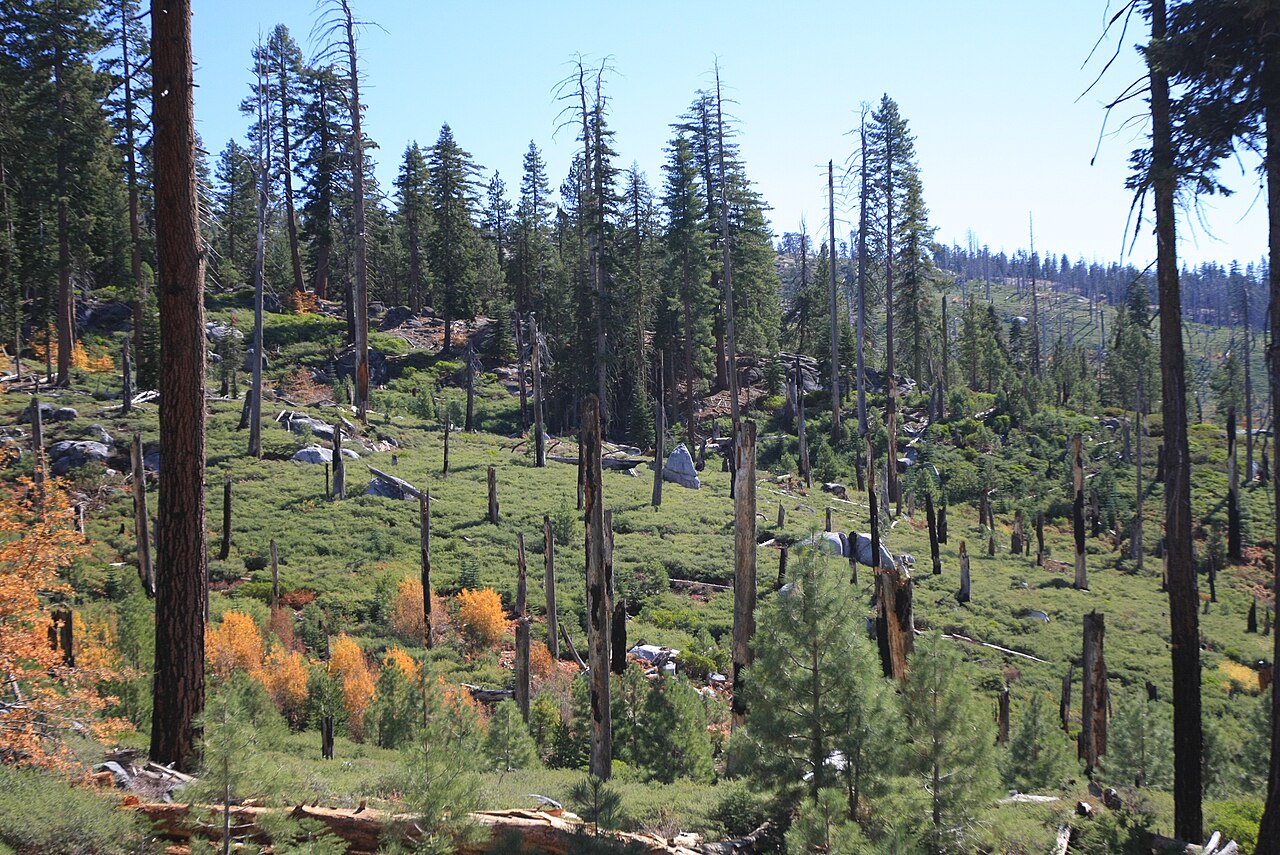
What is beyond serious dispute is the scale of the problem. The UK ranks among the most nature-depleted countries on Earth, having lost nearly half its biodiversity since the Industrial Revolution. The State of Nature report has repeatedly documented steep declines across birds, insects, plants and mammals. Rewilding advocates argue that piecemeal conservation — protecting isolated nature reserves while the surrounding landscape remains hostile to wildlife — can never reverse these trends. Only landscape-scale recovery, they insist, will do.
Community Rewilding and the Urban Fringe
Rewilding is not exclusively the preserve of wealthy landowners and remote estates. Across Britain, community groups are reclaiming brownfield sites, road verges, urban parks and ex-industrial land as wild corridors. The Wildlife Trusts' "30 by 30" ambition — to bring 30 per cent of Britain's land into recovery for nature by 2030 — relies heavily on this grassroots energy.
In the Peak District, farmers participating in the Moors for the Future partnership are restoring blanket bog — the vast, peat-forming habitat that once covered much of upland Britain and stores extraordinary quantities of carbon — by blocking drainage channels, re-seeding sphagnum moss and reducing grazing pressure. Restored peatlands not only sequester carbon but reduce downstream flooding and improve water quality, providing quantifiable benefits that can attract government funding through the Environmental Land Management scheme (ELMs), England's post-Brexit agricultural subsidy framework.
The integration of rewilding principles into ELMs represents perhaps the single most important policy shift for nature recovery in a generation. By paying farmers for "public goods" — clean water, carbon storage, biodiversity — rather than simply for the quantity of food they produce, the scheme creates a financial pathway for land managers to diversify away from intensive production without economic ruin.
The Fault Lines: Food, Land and Rural Voices
For all its ecological promise, rewilding is not without its critics, and dismissing those critics as reactionary or ignorant does the debate a disservice. The National Farmers' Union and some rural communities have raised legitimate concerns about food security, the concentration of rewilded land in the hands of wealthy individuals and corporations, and the risk that romantic urban visions of wilderness are imposed on landscapes that are also people's homes and workplaces.
The so-called "green lairds" controversy — in which wealthy investors have purchased large tracts of Scottish land for carbon offsetting and rewilding — has prompted calls for greater transparency about land ownership and meaningful consultation with existing rural communities. Critics point out that rewilding undertaken without local consent can reproduce colonial patterns of land use, clearing people from landscapes in the name of ecological restoration.
These tensions are real, but they are also navigable. Projects that combine genuine community ownership, transparent governance and diversified income streams — eco-tourism, sustainable forestry, nature-based payments — are demonstrating that rewilding and thriving rural communities need not be in opposition. The most successful projects are those that invite local people to shape the vision rather than simply receive it from outside.
Britain is, in many ways, an unlikely laboratory for rewilding. It is a small, densely populated island with millennia of agricultural history and a deeply contested relationship between people and land. Yet that same history — the loss, the degradation, the absence of species that ought to be here — is precisely what makes the ambition of recovery so compelling. The purple emperor butterfly at Knepp is not a nostalgic curiosity. It is a sign of what is possible when land is given space to breathe.
Frequently asked questions
What does rewilding actually mean in a British context?
Rewilding in Britain typically means restoring degraded ecosystems by reducing intensive land management, reintroducing lost species, and allowing natural processes — such as flooding, grazing by wild herbivores, and woodland regeneration — to take hold. It ranges from small community projects on former farmland to vast estate-scale initiatives spanning tens of thousands of acres.
Are rewilded areas open to the public?
Many rewilding projects actively welcome visitors as a way of building public support and generating income through eco-tourism. Sites such as Knepp Estate in West Sussex and Alladale Wilderness Reserve in Sutherland offer guided tours, wildlife safaris and accommodation, though some sensitive restoration zones are kept closed to minimise disturbance.
Does rewilding threaten farmers and rural livelihoods?
This is one of the most debated aspects of the movement. Critics argue that taking productive farmland out of food production puts pressure on rural economies and domestic food security. Proponents counter that diversified land use — combining rewilding with sustainable grazing, eco-tourism and payments for ecosystem services — can provide more resilient livelihoods than conventional farming in marginal areas.



Join in — free. Comments on Daily Junction are for members, so real names stay rare and bots stay out.
One field. We email you a 6-digit code — no password needed. Your comment is kept while you do it.
Under 13? You’ll need a parent’s OK first — it takes them one click.