
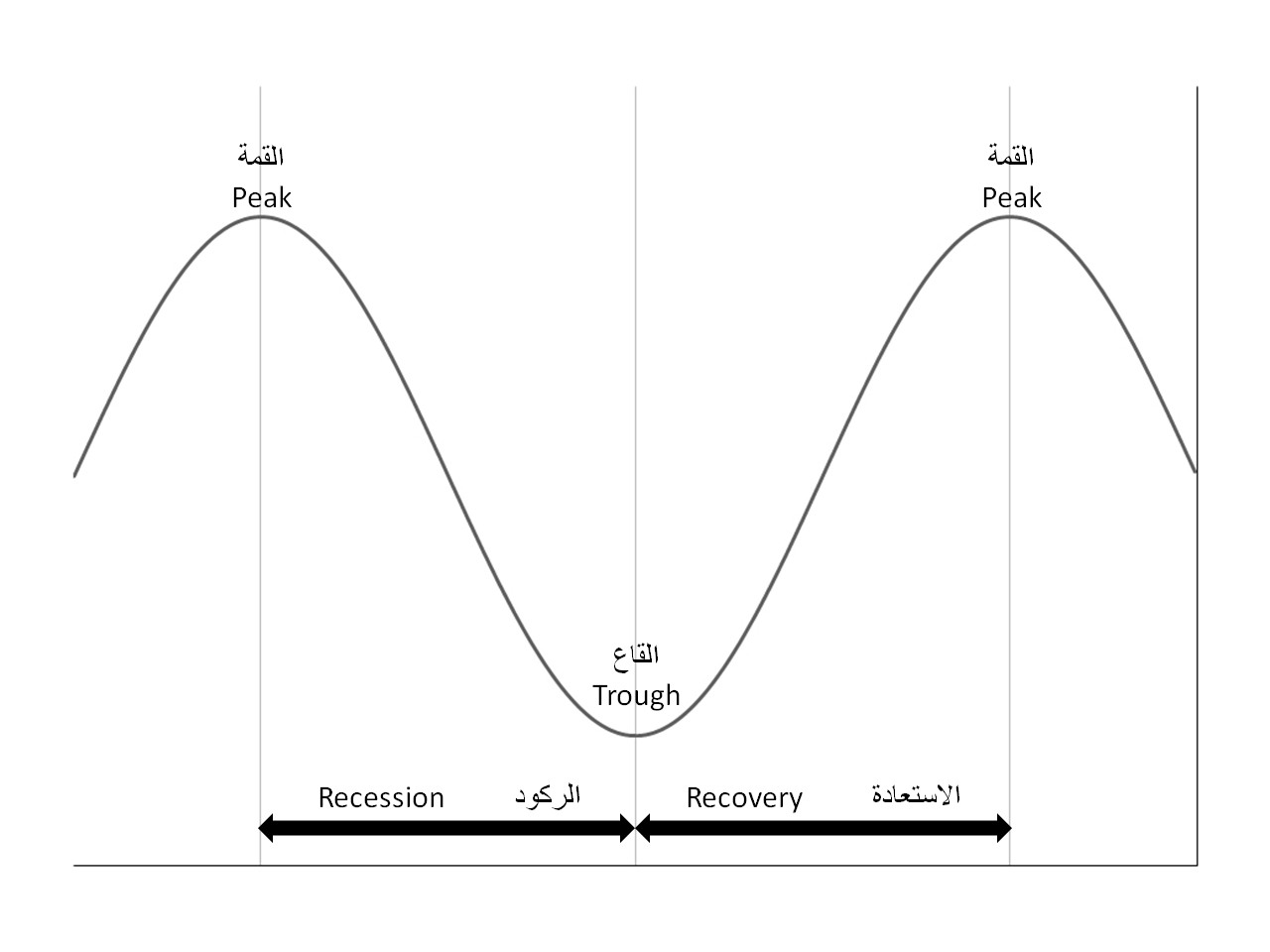
When the economy turns sour, the words used to describe it carry real weight. Calling a downturn a "recession" signals a rough but familiar patch; calling it a "depression" evokes something far darker — breadlines, mass unemployment and a crisis lasting years. The two terms are often used loosely, but to economists they describe downturns of very different severity.
Here is how a recession differs from a depression, where the line between them sits, and why getting the distinction right matters.
What they are
A recession is a significant, widespread decline in economic activity that lasts more than a few months. A depression is a much deeper, longer and more severe version of the same thing.
The key point is that the difference is one of degree, not of kind. Both describe the economy shrinking — falling output, rising unemployment, weaker spending and investment. A depression is, in essence, a recession that becomes catastrophically deep and refuses to end. That is also why the boundary between a very bad recession and a depression can be genuinely blurry.
Both sit within the ordinary rhythm of the economy known as the business cycle: periods of growth (expansion) followed by periods of contraction. To understand either, it helps to know how economic activity is measured in the first place, which comes down to a single headline figure: GDP.
Defining a recession
A recession has a reasonably clear, if debated, definition. The best-known rule of thumb is:

Two consecutive quarters (six months) of falling Gross Domestic Product.
GDP is the total value of goods and services an economy produces. When it shrinks for two quarters in a row, that "technical recession" rule is often invoked in headlines, and in the UK the Office for National Statistics publishes the GDP figures that decide it.
However, many economists regard that rule as too crude on its own. In the United States, for instance, the body that officially dates recessions looks at a broader picture — including employment, incomes, industrial production and spending — rather than relying solely on GDP. A recession, on this richer view, is "a significant decline in economic activity spread across the economy, lasting more than a few months."
Either way, the hallmarks of a recession are recognisable:
- Falling economic output.
- Rising unemployment as firms cut back.
- Weaker consumer spending and business investment.
- Lower confidence and, often, falling company profits.
Crucially, recessions are normal. They are an expected, recurring part of the economic cycle, arriving every several years on average, and most are relatively short — lasting months rather than years before recovery begins.
Defining a depression
A depression is harder to pin down, because there is no official numerical definition. Economists reserve the word for downturns of exceptional severity and duration. As an informal guide, some suggest a depression involves a fall in output of more than a certain large percentage, or a downturn lasting several years rather than months — but no single threshold is agreed.
What sets a depression apart is the scale of the damage:
- Severity. Output does not just dip but collapses, often by a fifth or more.
- Duration. Instead of months, the downturn drags on for years.
- Unemployment. Joblessness reaches extreme levels, affecting a quarter of the workforce or more in the worst cases.
- Breadth and depth. Falling prices (deflation), waves of business failures and bank collapses, and a deep loss of confidence can become self-reinforcing.
The defining example is the Great Depression of the 1930s, which began with the Wall Street Crash of 1929 and spread worldwide. In the hardest-hit countries, output plunged, unemployment soared to around a quarter of workers, and the crisis lasted most of a decade. Its severity reshaped economics and politics for a generation.
The differences at a glance
| Recession | Depression | |
|---|---|---|
| Severity | Significant decline | Catastrophic collapse |
| Duration | Months | Years |
| Unemployment | Rises, often into double digits | Extreme, can reach a quarter or more |
| Frequency | Regular part of the cycle | Very rare |
| Definition | Rough rule (two quarters of falling GDP) | No agreed numerical definition |
Why the distinction matters
This is not just terminology. The label shapes how seriously a crisis is taken and how forcefully governments and central banks respond.
Because depressions are so destructive, policymakers go to great lengths to stop a recession from spiralling into one. Lessons drawn from the 1930s — about the dangers of letting banks fail, credit dry up and demand collapse — inform how institutions such as the Bank of England and the IMF act today. During the 2008 global financial crisis, for example, the scale of intervention was driven partly by a determination to avoid a repeat of the Great Depression. Severe downturns ripple across borders too, since economies are tightly linked through international trade and finance, so a deep crisis in one major economy rarely stays contained.
For ordinary people, the difference is the gap between a difficult few years and a generation-defining catastrophe. Understanding which is which helps cut through alarming headlines: most downturns, painful as they are, are recessions that the economy eventually recovers from — not the rare, devastating depressions that loom so large in history.
The bottom line
A recession is a significant, broad-based decline in economic activity lasting more than a few months — a normal, recurring feature of the business cycle. A depression is the same phenomenon taken to an extreme: vastly deeper, far longer and far more damaging, with the 1930s Great Depression as the defining case.
The difference is one of scale and duration rather than kind, which is exactly why economists and policymakers work so hard to keep an ordinary recession from ever tipping into something worse.
Frequently asked questions
What is the simplest difference between a recession and a depression?
Both are economic downturns, but a depression is far more severe and lasts much longer. A recession may last months and cause moderate job losses; a depression involves a massive collapse in activity and very high unemployment lasting years.
What is the technical definition of a recession?
A widely used rule of thumb is two consecutive quarters of falling GDP. However, official bodies often use a broader assessment of factors such as employment, output and incomes, rather than relying on that single measure.
Is there an official definition of a depression?
No. Unlike a recession, there is no agreed numerical threshold for a depression. The term is reserved for downturns of exceptional depth and length, such as the Great Depression of the 1930s.
How often do recessions and depressions happen?
Recessions are a normal, recurring feature of the economy, arriving every several years on average. Depressions are extremely rare; most economists point to the 1930s as the last true global example.



Join in — free. Comments on Daily Junction are for members, so real names stay rare and bots stay out.
One field. We email you a 6-digit code — no password needed. Your comment is kept while you do it.
Under 13? You’ll need a parent’s OK first — it takes them one click.