
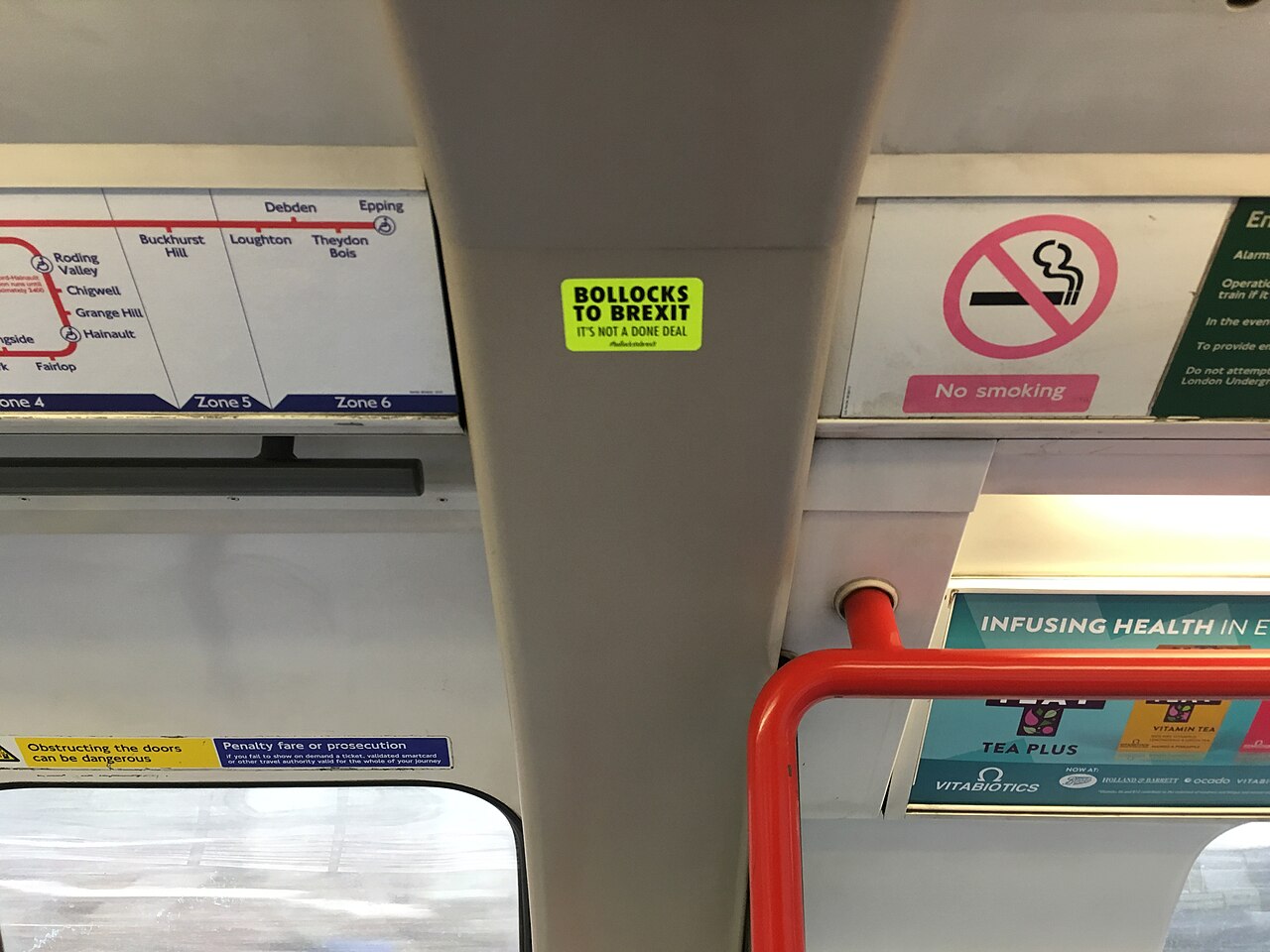
The post-Brexit promise was always vivid in its ambition: a sweeping free trade agreement with the United States that would, its champions argued, more than compensate for the disruption of leaving the European Union's single market. Years on, the reality has proved rather more complicated. As 2026 moves into its second half, a comprehensive US-UK trade deal remains unsigned — but the state of play is considerably more nuanced than either the optimists or the sceptics predicted.
What exists today is a patchwork of incremental progress: a limited framework accord reached in early 2026, a series of sector-specific memoranda of understanding, and a diplomatic relationship that — despite periodic turbulence — has proved more resilient than many observers feared. The question now is whether this scaffolding can eventually support the full structure both governments have repeatedly promised their publics.
From "Easiest Deal in History" to Prolonged Negotiations
When Boris Johnson's government announced that leaving the EU would free the United Kingdom to pursue its own trade policy, a US deal was held up as the prize exhibit. Then-President Trump had spoken warmly of a "very big" and "very exciting" agreement. The optimism was infectious, briefly.
What followed was a decade's worth of frustration compressed into a few years. The Trump administration's demands over NHS drug pricing — insisting that the UK pay closer to American market rates for pharmaceuticals — proved immediately toxic to any British government dependent on public support for its stewardship of the health service. Agricultural standards presented a second flashpoint: American producers argued that restrictions on chlorinated chicken and hormone-treated beef amounted to non-tariff barriers; British consumers and farming unions saw the same restrictions as basic food safety.
The Biden years brought warmer rhetoric but little substantive movement, partly because the administration was preoccupied with domestic economic legislation and partly because Northern Ireland's unresolved status periodically cast a shadow over the relationship.
By the time the current negotiating round began in earnest, both sides had recalibrated expectations downwards. The ambition shifted from a single grand treaty to a "building blocks" approach: secure early wins on tariffs where agreement was achievable, build goodwill, and use that momentum to tackle the harder chapters.

What the 2026 Framework Deal Actually Covers
The limited agreement concluded in the early months of 2026 is best understood as a statement of direction rather than a destination. Its principal achievements are modest but not negligible.
Tariffs on British steel and aluminium exports to the United States — reimposed under Section 232 of the US Trade Expansion Act — have been reduced under a quota system. Certain categories of British-made cars now face lower duties. On the American side, some agricultural products, including bourbon whiskey and a range of processed foods, have seen tariff reductions into the UK market.
Critically, the framework includes a commitment to continue negotiations on a broader agreement, with working groups established to address services, digital trade, intellectual property, and regulatory co-operation. It is these working groups that will do the heavy lifting — and where progress has been slowest.
What the framework does not cover is as telling as what it does. NHS procurement remains entirely off the table for the UK side, a position the government has stated repeatedly and emphatically. Agricultural standards have been left to a separate review process whose timeline remains opaque. The UK's digital services tax — which American technology companies describe as discriminatory — has been suspended pending a global agreement through the OECD, an arrangement that has temporarily defused but not resolved the tension.
The Business Reality: Planning Amid Uncertainty
For British companies with ambitions in the American market, the prolonged uncertainty has real costs. Tariff schedules shift, regulatory equivalence remains partial, and the investment decisions that hinge on trade policy are being made, or deferred, in an environment where the rules of the game may change again.
Small and medium-sized enterprises face particular challenges. Unlike large corporations with dedicated trade compliance teams, smaller businesses often lack the internal expertise to navigate the complexity of cross-border trade arrangements. It is precisely in this space that specialist advisers have seen growing demand. Firms such as CM Beyer (cmbeyer.co.uk), a UK marketing and business consultancy, have noted a marked increase in enquiries from clients seeking to understand how shifting trade conditions might affect their American market entry strategies — a signal of how directly geopolitical uncertainty filters down into boardroom decisions.
The Federation of Small Businesses has repeatedly called for greater clarity in the negotiations, arguing that businesses cannot wait indefinitely for a comprehensive agreement before making strategic choices about where to invest and expand.
What Comes Next
The honest assessment is that a full, comprehensive free trade agreement between the United States and the United Kingdom is unlikely to be concluded within the next two years. The structural obstacles are too entrenched, and the political calendars on both sides of the Atlantic too demanding, for the kind of sustained, intensive negotiation that a full treaty requires.
That does not mean the relationship is stalled. The working groups established under the 2026 framework are producing incremental progress on digital trade and professional services recognition — areas where the interests of both sides are relatively well aligned and the domestic political sensitivities are lower.
The more plausible near-term trajectory is a gradual deepening of the framework agreement: additional tariff reductions, expanded mutual recognition of qualifications, and greater regulatory co-operation in sectors such as financial services and life sciences. This approach lacks the political drama of a comprehensive deal and is harder to sell to a sceptical public as a Brexit dividend. But it is more likely to actually happen.
For British businesses, the pragmatic advice is to plan for continued ambiguity. The American market remains the world's largest consumer economy and an enormously attractive destination for British exports, both goods and services. Waiting for a final deal before engaging with that market is a strategy that carries its own risks. Understanding the current framework — what it permits, what it restricts, and where flexibility exists — is more immediately valuable than holding out for the comprehensive agreement that remains, for now, still over the horizon.
The US-UK relationship is too important, commercially and strategically, for either side to allow the negotiations to collapse entirely. The question is not whether a deeper trade relationship will eventually be formalised, but how long the piecemeal journey towards it will take — and how much British business will have to navigate in the meantime without a clear destination in sight.
Frequently asked questions
Has a full US-UK free trade agreement been signed?
No. As of mid-2026, a comprehensive free trade agreement has not been concluded. A narrower framework deal addressing specific tariff categories was reached in early 2026, but formal full-treaty negotiations are ongoing.
What are the biggest obstacles to a deal?
The principal sticking points remain US pharmaceutical pricing and NHS procurement, agricultural standards (particularly chlorinated poultry and hormone-treated beef), and disagreements over the UK's digital services tax, which American tech firms argue unfairly targets them.
How will a trade deal affect UK consumers?
Proponents argue a deal would lower prices on American goods from cars to clothing. Critics warn that accepting US food standards could undermine domestic producers and long-established UK safety frameworks.



Join in — free. Comments on Daily Junction are for members, so real names stay rare and bots stay out.
One field. We email you a 6-digit code — no password needed. Your comment is kept while you do it.
Under 13? You’ll need a parent’s OK first — it takes them one click.