
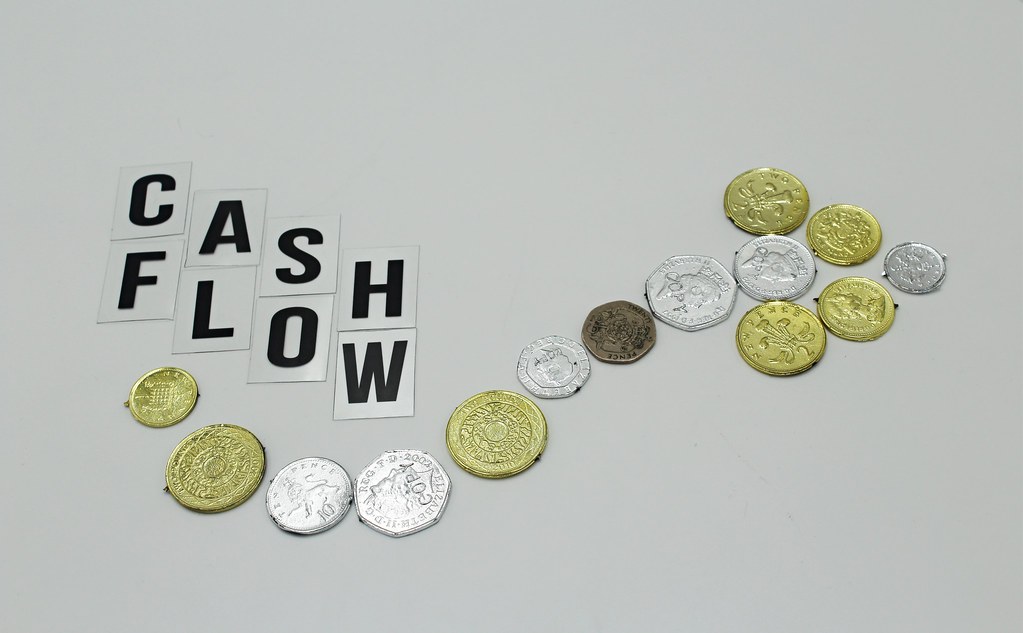
There is an old saying that turnover is vanity, profit is sanity, but cash is reality. Plenty of small businesses have closed not because they were unprofitable, but because, on a given Friday, there was not enough money in the bank to pay wages or suppliers. Cash flow management is the discipline of making sure that does not happen to you. This guide explains what cash flow is, why it differs from profit, and how to forecast and protect it. This is general information, not financial advice.
What cash flow is
Cash flow is the movement of money into and out of your business over time. Money in (from sales, loans or investment) is inflow; money out (to suppliers, staff, rent, tax) is outflow. Positive cash flow means more is coming in than going out over a period; negative means the reverse.
The key word is timing. Cash flow is not about how much you will eventually earn — it is about whether the money is actually there when you need it. A business can have a full order book and still be unable to pay a bill due tomorrow because the customers who owe it have not paid yet.
Think of cash like fuel in a car. Profit tells you the journey is worthwhile; cash flow tells you whether there is enough in the tank to reach the next petrol station.
Cash flow versus profit
This distinction trips up many new business owners, so it is worth nailing down.
Profit is an accounting figure: your income minus your costs over a period, regardless of when the cash actually moves. Cash flow is the real money in your account, on the real dates it arrives and leaves.
They differ because of timing gaps:
- You might make a sale today but not get paid for 30 or 60 days — profit now, cash later.
- You might buy stock or pay a deposit before you sell anything — cash out now, profit later.
- Tax, loan repayments and asset purchases affect cash but are not simple "costs" in the profit calculation.
| Profit | Cash flow | |
|---|---|---|
| Measures | Earnings over a period | Money in and out, by date |
| Cares about timing? | No | Yes |
| Can be positive while the other is negative? | Yes | Yes |
The practical lesson: watch both. A healthy business needs to be profitable over time and hold enough cash to meet its obligations as they fall due. Understanding what a balance sheet shows — including how much cash and how many unpaid invoices you are carrying — complements the cash flow picture.
Forecasting your cash flow
The single most useful habit in small-business finance is keeping a cash flow forecast: a simple projection of the money you expect in and out, period by period.
You do not need special software — a spreadsheet works. The method:
- Start with your opening bank balance for the period (say, this week or month).
- List expected inflows — customer payments you realistically expect to land, not just invoices you have sent.
- List expected outflows — wages, suppliers, rent, tax, loan repayments, everything due.
- Calculate the closing balance: opening balance plus inflows minus outflows.
- Carry that closing balance forward as the opening balance for the next period, and repeat.
Do this on a rolling basis — always looking, say, 12 weeks or several months ahead — and update it as reality unfolds. The goal is to spot a cash squeeze before it arrives, while you still have options. A forecast that flags a tight month six weeks out gives you time to chase invoices, delay a non-urgent purchase or arrange finance. The same forecast discovered on the day is just a crisis.
Forecasting also forces useful realism. Be conservative on inflows (assume some customers pay late) and thorough on outflows (do not forget quarterly or annual bills like tax and insurance). Tracking a few simple key performance indicators, such as how long customers take to pay, makes each forecast sharper.
Tackling late payments
For many small firms, the biggest cash flow threat is not low sales but slow payment — customers who take far longer to pay than agreed. A pile of unpaid invoices is profit on paper and nothing in the bank.
You can do a great deal to reduce the problem:
- Set clear terms up front. State payment terms (for example, "payment within 14 days") on quotes and invoices, and make sure customers agree to them before you start.
- Invoice promptly and accurately. Send invoices as soon as work is done, with correct details and a clear due date. A wrong or late invoice is an easy excuse to delay.
- Make paying easy. Offer convenient payment methods and include everything the customer needs to pay without coming back to you.
- Chase early and politely. A friendly reminder the day after an invoice falls due is normal and effective. Have a simple, escalating routine for overdue accounts.
- Know your rights. In the UK, businesses have a statutory right to claim interest and reasonable costs on late commercial payments. You rarely need to use it, but knowing it exists strengthens your position. The rules are set out on GOV.UK.
Building a small cash buffer when times are good is the other half of the defence. A reserve that covers a few weeks or months of essential outgoings turns a late payment from an emergency into an inconvenience. If a genuine gap still opens up, understanding how business lending works helps you weigh short-term finance calmly rather than in a panic.
Building good cash flow habits
Cash flow management is not a one-off exercise; it is a routine. A few habits keep you in control:
- Review your forecast regularly — weekly is ideal for a small, fast-moving business.
- Watch your timing, not just your totals: when money lands and leaves matters as much as how much.
- Separate business and personal money so the picture stays clear.
- Spread out big outflows where you can, and align them with expected inflows.
- Keep a buffer for the unexpected, because something always is.
None of this requires advanced accounting. It requires looking ahead honestly and acting early — the opposite of waiting to see what the bank balance does.
The bottom line
Cash flow is the timing of money in and out of your business, and it is what keeps the doors open day to day. Because a profitable business can still run dry, the essentials are simple: understand the difference between cash and profit, keep a rolling cash flow forecast so you see squeezes coming, and manage late payments with clear terms and prompt, polite chasing. Add a cash buffer for the unexpected, and review the numbers often. Stay on top of timing, and you give an otherwise healthy business the breathing room it needs to grow.
Frequently asked questions
What is the difference between cash flow and profit?
Profit is what is left after costs over a period; cash flow is the actual money moving in and out, and when. You can be profitable on paper but short of cash if customers pay late or you have spent on stock you have not yet sold. This is general information, not financial advice.
How do I create a cash flow forecast?
List your expected cash coming in and going out, week by week or month by month, starting from your current bank balance. Add the in-flows, subtract the out-flows, and carry the balance forward. Update it regularly as reality unfolds.
Why is cash flow so important for small businesses?
Because running out of cash stops a business even if it is otherwise healthy. Small firms often have thin reserves, so a single late payment or unexpected bill can cause real strain. Managing timing keeps you solvent.
What can I do about late-paying customers?
Set clear payment terms up front, invoice promptly and accurately, and chase politely but firmly as soon as a payment is overdue. UK businesses also have a statutory right to claim interest on late commercial payments. See GOV.UK for the rules.



Join in — free. Comments on Daily Junction are for members, so real names stay rare and bots stay out.
One field. We email you a 6-digit code — no password needed. Your comment is kept while you do it.
Under 13? You’ll need a parent’s OK first — it takes them one click.