

Forests cover roughly a third of the world's land, and they do far more than fill the horizon with green. They store carbon, shelter most of the planet's land-based wildlife, regulate rainfall and support the livelihoods of well over a billion people. That is what makes their steady disappearance one of the most consequential environmental stories of our time.
Here is what deforestation actually is, why it keeps happening, and the chain of consequences it sets off.
What it is
Deforestation is the permanent clearing of forest so the land can be used for something else — typically farmland, pasture, mining or buildings. The key word is permanent. Trimming a wood for timber and letting it grow back is not deforestation; converting it into a cattle ranch or a plantation, so the forest never returns, is.
It is worth separating two related terms. Deforestation is the outright loss of forest. Forest degradation is the slower decline in a forest's health and density — through selective logging, fire or fragmentation — even if some tree cover remains. Both matter, but deforestation is the more visible and final of the two.
Most of the world's forest loss today is concentrated in the tropics, home to the richest and most carbon-dense forests on Earth, including the Amazon, the Congo Basin and the forests of Southeast Asia.
What drives it
The causes of deforestation are overwhelmingly economic: forests are cleared because the land, or what comes off it, is worth money. According to the UN Food and Agriculture Organization, agriculture is by far the largest driver.
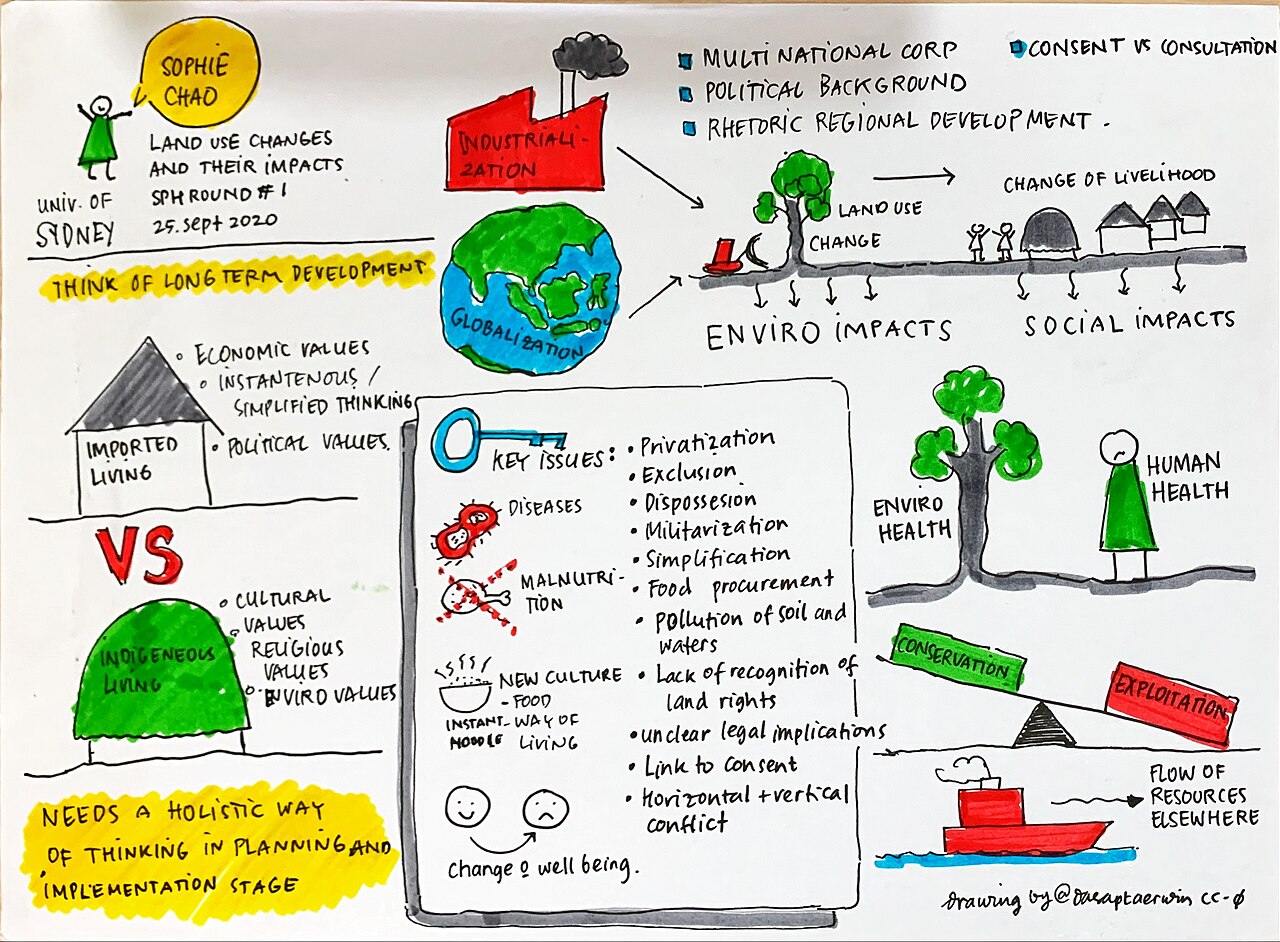
- Farming and grazing. Clearing land to grow crops or raise livestock is the biggest single cause. Cattle ranching in particular accounts for a large share of tropical forest loss.
- Commodity crops. Global demand for products such as palm oil, soy, cocoa and coffee pushes plantations into forested areas. Much of the soy grown worldwide feeds farmed animals.
- Logging. Harvesting timber and paper can be sustainable, but illegal or poorly managed logging opens up forests and often precedes full clearance.
- Infrastructure and mining. Roads, dams, settlements and mineral extraction all eat into forest, and new roads make previously remote areas accessible for further clearing.
- Fire. Some forest is deliberately burned to clear it, and a warming climate makes wildfires more frequent and severe.
A crucial point ties many of these together: demand is often global. A forest cleared in one country may be feeding consumption thousands of miles away — a pattern shaped by how international trade works and the supply chains that move commodities around the planet.
The consequences
The effects of losing forests ripple outward, touching the climate, wildlife, water and people.
Carbon and climate. Forests are vast stores of carbon, locked up in trees and soil. When they are cleared or burned, that carbon is released as carbon dioxide, making deforestation a significant source of global greenhouse gas emissions. Worse, the planet loses a living system that would otherwise keep pulling CO2 from the air. In effect, cutting forests both adds carbon and removes one of nature's best tools for removing it — which is partly why so much hope is pinned on engineered alternatives like carbon capture, though no technology yet matches a healthy forest.
Biodiversity loss. Forests, especially tropical rainforests, are the richest habitats on land, home to a huge share of the world's plant and animal species. Clearing them destroys habitats and is a leading cause of extinction. Many species are highly specialised and cannot survive elsewhere.
Water and soil. Trees help regulate the water cycle, releasing moisture that forms rainfall and holding soil in place with their roots. Removing them can disrupt local rainfall, increase flooding and lead to soil erosion, leaving land less fertile and more prone to landslides.
People and livelihoods. Many communities, including Indigenous peoples, depend on forests for food, medicine, materials and cultural identity. Deforestation can displace them and erode ways of life built around the forest over generations.
What is being done
Slowing deforestation is difficult precisely because the pressures are economic, but progress is possible and happening in places.
- Protecting existing forests. Establishing and enforcing protected areas, and supporting the land rights of Indigenous communities who often safeguard forests effectively, are among the most powerful measures.
- Restoration. Reforestation and allowing natural regrowth can bring back lost forest, though a young plantation is no substitute for an ancient, biodiverse one. Restoration takes decades to deliver its full benefit.
- Cleaning up supply chains. Governments and companies are increasingly trying to keep commodities linked to deforestation out of their products. The UK, for example, has moved to require larger businesses to carry out due diligence on certain forest-risk commodities so that illegally cleared land does not enter supply chains.
- Consumer choices. Demand matters. Choosing products certified as sustainably sourced, cutting food waste and eating less of the most forest-intensive products can ease the pressure. These everyday decisions echo the reduce-and-reuse thinking behind recycling — using less of what costs the planet most.
International agreements have also seen many countries pledge to halt and reverse forest loss, though commitments are only as good as the action that follows.
The bottom line
Deforestation is the permanent clearing of forest for other land uses, driven above all by agriculture and the global demand for commodities. Its consequences are far-reaching: released carbon and a weakened climate defence, lost wildlife and habitats, disrupted water and soil, and damaged livelihoods.
The encouraging news is that forests can be protected and, in time, restored — but prevention beats cure. Safeguarding the forests still standing, cleaning up the supply chains that drive their loss, and being mindful of what we consume are the surest ways to keep the world's great forests doing the work only they can do.
Frequently asked questions
What is the main cause of deforestation?
Agriculture is the leading cause globally. Clearing land to grow crops, raise livestock and produce commodities such as palm oil, soy and beef accounts for the majority of forest loss, particularly in tropical regions.
Why is deforestation bad for the climate?
Forests absorb and store large amounts of carbon dioxide. When they are cut down or burned, that carbon is released into the atmosphere, and the planet also loses a natural system that would otherwise keep removing CO2 from the air.
Is deforestation the same as logging?
Not always. Logging means harvesting timber, which can be done sustainably so that the forest regrows. Deforestation specifically means clearing forest permanently for another use, so the trees do not return.
Can deforestation be reversed?
Lost forest can be restored through reforestation and natural regrowth, but it takes decades and a young forest is not a perfect replacement for an old, established one. Protecting existing forests is more effective than relying on replanting.



Join in — free. Comments on Daily Junction are for members, so real names stay rare and bots stay out.
One field. We email you a 6-digit code — no password needed. Your comment is kept while you do it.
Under 13? You’ll need a parent’s OK first — it takes them one click.