

Insulating Your UK Home: The Improvements That Actually Pay Back
Britain's housing stock is, by European standards, embarrassingly leaky. Roughly a third of UK homes were built before 1919, many with solid walls, single-glazed sash windows, and loft spaces stuffed with nothing more effective than decades of dust. Even mid-century semi-detached houses — the backbone of suburban Britain — routinely haemorrhage warmth through uninsulated cavity walls and loft hatches that may as well be left open in January. The result is heating bills inflated by anywhere from 25 to 45 per cent above what they need to be, depending on the property.
After two years of sustained energy price shocks, many households are finally taking the question seriously: which insulation improvements actually deliver, and which are expensive gestures that take a generation to pay for themselves? The answers are more clear-cut than the industry sometimes lets on.
The Two Upgrades That Genuinely Move the Needle
If you own a detached or semi-detached house built between roughly 1930 and 1990, the statistical case for loft insulation and cavity wall insulation is about as close to a sure thing as personal finance gets. The Energy Saving Trust estimates that topping up loft insulation from 100mm to the recommended 270mm can save a typical semi-detached household between £150 and £200 per year on heating bills alone. The installation itself costs between £300 and £600 for most properties. That is a payback period of under four years — better than almost any financial product available.
Cavity wall insulation, where the property's construction permits it, is similarly compelling. Injected mineral wool or expanded polystyrene beads fill the air gap between inner and outer brick leaves, cutting heat loss through walls by up to 35 per cent. Savings of £150 to £250 annually are typical for a three-bedroom semi, with installation costs of £400 to £800. Again, payback inside five years is realistic.
Both measures also have the considerable advantage of being largely invisible and reversible in the sense that they do not alter the character of a home, require planning permission, or demand significant disruption to daily life. A professional installer can complete both jobs in a single working day.
What to Do With a Solid-Walled Home
Properties built before roughly 1920 present a harder problem. Pre-cavity construction means solid brick or stone walls, and there is no void to fill. The options are external wall insulation — where insulating boards are fixed to the outside of the building and then rendered or clad — or internal wall insulation, where insulated plasterboard is fixed to interior surfaces. Both are substantially more expensive, typically £8,000 to £22,000 for a whole house, and both carry trade-offs.
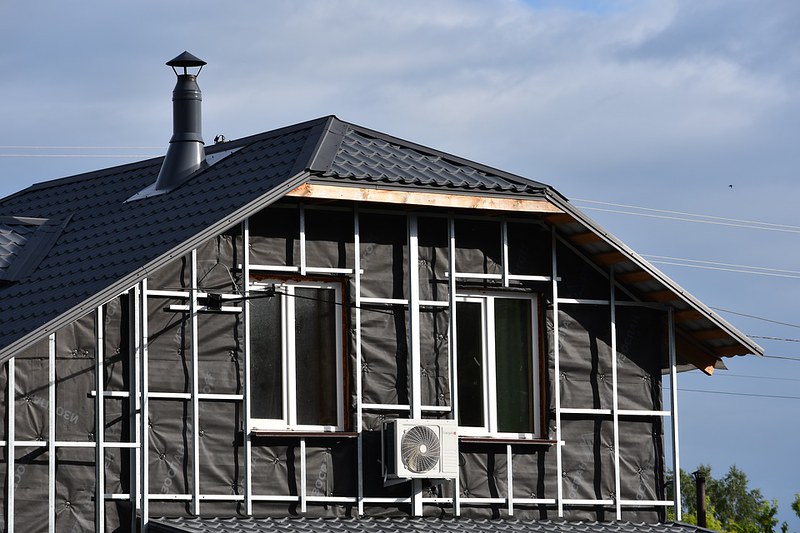
External insulation changes a building's external appearance and may require planning permission in conservation areas. Internal insulation reduces room dimensions marginally and involves significant redecoration. Neither is trivial.
And yet for owners of solid-walled homes who intend to stay put, the long-term arithmetic still stacks up. Annual savings of £400 to £700 are achievable in older, poorly insulated properties. Over fifteen to twenty years — a reasonable horizon for someone in their family home — the cumulative savings approach or exceed the installation cost. That calculation strengthens further when factoring in the EPC improvement, which directly affects resale value. Research from Rightmove and Nationwide has repeatedly found that homes rated C or above command price premiums of several percentage points over otherwise comparable lower-rated properties.
Before committing to solid wall insulation, it is worth modelling the full financial picture alongside your mortgage and remortgage options. Independent comparison tools such as QuidCompare can help homeowners assess financing options and identify the most cost-effective way to fund larger retrofit projects without overpaying on interest.
Grants, Schemes, and the Money You Might Be Leaving on the Table
One of the most consistent findings from conversations with homeowners who have retrofitted insulation is how many of them paid in full when they did not need to. The Great British Insulation Scheme (GBIS), administered through energy suppliers, offers free or heavily subsidised loft and cavity wall insulation to households meeting either an income-based or property-based eligibility threshold. Properties with an EPC rating of D, E, F or G, and households receiving qualifying benefits, are the primary targets.
The scheme is not without its critics — delivery has been patchy, and some contractors working under the scheme have attracted complaints. But for eligible households, dismissing it out of hand is a significant financial mistake. The first step is a call or online application to your energy supplier. If rejected, the Energy Company Obligation (ECO4) scheme provides a second avenue, with a particular focus on fuel-poor households in the least efficient properties.
For those not qualifying for subsidies, VAT on energy-saving materials including insulation is charged at zero per cent under current UK tax rules — a meaningful reduction on larger projects.
Getting the Sequence Right
The order in which you carry out improvements matters. The standard advice from retrofit specialists is to address the building fabric before upgrading heating systems. Installing a heat pump in a poorly insulated home is like buying a high-efficiency car and driving it with the windows down — the potential is never realised because the losses elsewhere overwhelm the gains.
The logical sequence for most UK homes runs: loft insulation first (cheapest, quickest), then cavity wall or solid wall insulation, then glazing improvements, and only then consideration of low-carbon heating such as heat pumps or hybrid systems. Floor insulation and draught-proofing sit alongside this sequence as lower-cost, lower-return measures that nonetheless contribute meaningfully in older properties.
It is also worth commissioning a proper retrofit assessment from a qualified assessor before spending significant money. A good assessor will model the whole building, identify the order of measures that maximises savings for your specific property type, and flag any interplay between improvements — for instance, tightening a building envelope too aggressively without improving ventilation can cause condensation and damp.
The Honest Bottom Line
Home insulation is one of the few home improvement categories where the financial case is largely independent of taste, fashion, or market timing. Loft and cavity wall insulation will almost certainly pay back within five years for the majority of UK households, deliver ongoing savings indefinitely thereafter, improve comfort, reduce carbon emissions, and boost EPC ratings that increasingly influence both resale values and mortgage eligibility.
Solid wall insulation is a slower burn, but for those with older properties and a long-term horizon, it remains the most transformative single fabric improvement available. The key is to start with an honest assessment of what your home actually needs, claim every grant and subsidy you are entitled to before spending a pound of your own money, and resist the temptation to skip straight to expensive technology before the fundamentals are addressed.
In a housing market where running costs are now a primary factor in buyer decisions, a well-insulated home is no longer just a comfort upgrade. It is a financial asset.
Frequently asked questions
How long does loft insulation take to pay back its cost?
For a typical semi-detached house, professionally installed loft insulation costs between £300 and £600 and can save around £150 to £200 per year on heating bills, giving a payback period of roughly two to four years. Top-up insulation on an existing but thin layer is even cheaper and pays back faster.
Can I get free or subsidised insulation through a government scheme?
Yes. The Great British Insulation Scheme (GBIS) offers free or heavily subsidised loft and cavity wall insulation to households in lower energy-performance-rated homes and those receiving certain means-tested benefits. Your energy supplier is the first port of call, or you can check eligibility through the government's official scheme portal.
Does insulation actually add value to my home?
Evidence from Nationwide and Rightmove data suggests homes with an EPC rating of C or above attract a price premium of between 3% and 10% over equivalent lower-rated properties. Insulation improvements that push a property from band E to band C or better are likely to be reflected in a higher valuation and faster sale.



Join in — free. Comments on Daily Junction are for members, so real names stay rare and bots stay out.
One field. We email you a 6-digit code — no password needed. Your comment is kept while you do it.
Under 13? You’ll need a parent’s OK first — it takes them one click.