

Ask ten UK small business owners what their brand stands for, and most will describe their logo, their colour palette, or their strapline. Very few will describe the strategic position their business holds in the market — the specific problem they solve, for whom, and why their approach is different from every alternative a customer could choose. That gap between visual identity and strategic positioning is where a great many marketing budgets disappear without trace.
What brand positioning actually means
Positioning is not a creative exercise. It is a strategic one. At its core, a positioning statement answers a single question: why should a particular type of customer choose your business over all available alternatives? The answer has to be specific enough to exclude some customers, distinct enough to be credible, and consistent enough to hold across every touchpoint from your website to your sales conversations.
The concept was popularised in the 1980s but remains as relevant as ever. In a market where UK consumers and businesses have more choice than at any previous point, a muddy or generic position — "quality service at competitive prices" — is invisible. It says nothing, differentiates nothing, and gives your marketing team nothing to work with.
"Positioning is not what you do to a product. It is what you do to the mind of the prospect." — Al Ries and Jack Trout, Positioning: The Battle for Your Mind
Done well, positioning does three things at once: it attracts the customers most likely to value your offer, it justifies your price point, and it makes your marketing measurably more efficient. Every asset — ad, email, brochure, proposal — becomes easier to produce and more persuasive when it pulls from a clear strategic foundation.
Why UK SMEs tend to skip it
The most common reason small and medium businesses avoid formal positioning work is time. Running a business leaves little room for the kind of structured thinking that positioning requires. The second reason is that positioning feels abstract compared with the tangible outputs of marketing — a new website, a social media campaign, a rebrand. It is easier to brief a designer than to spend two weeks interrogating your own assumptions about who your best customers are and why they actually buy from you.
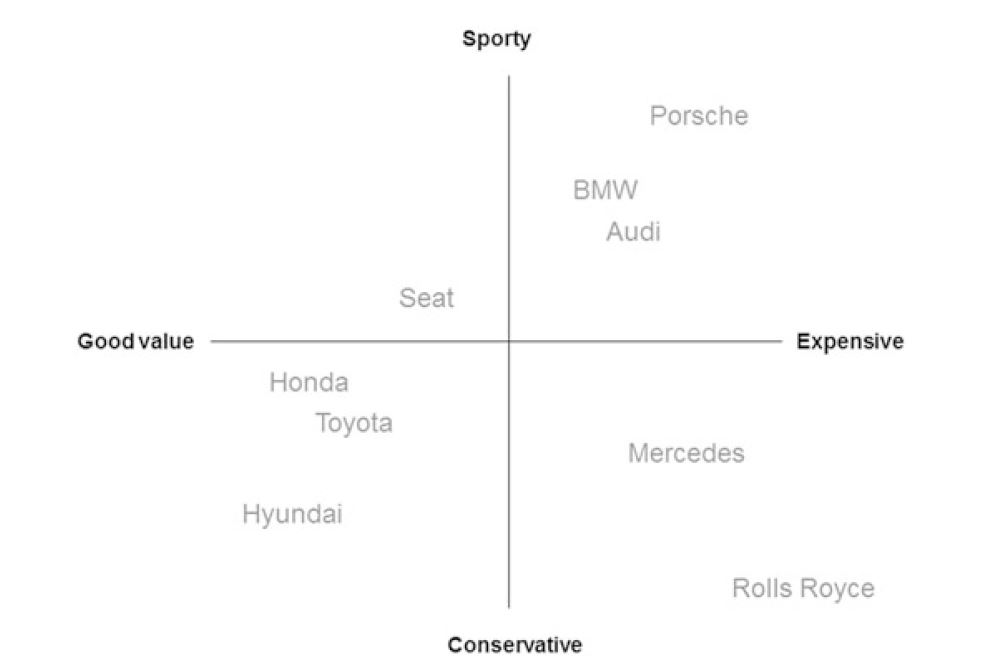
The cost of skipping it is real, even if it is invisible. Businesses without a clear position tend to compete on price, because price is the only comparison axis left when everything else looks the same. They attract a wide range of customers, many of whom are poorly matched and expensive to serve. Their marketing produces inconsistent results, because each campaign reflects whoever wrote it rather than a shared strategic direction.
You might also find it useful to read what good marketing strategy looks like for growing businesses or explore how clear writing strengthens every customer-facing message.
How to approach positioning as a fixed-scope project
One practical approach — particularly for businesses that have been trading for a few years but have never done formal positioning work — is to treat it as a bounded, time-limited project rather than an ongoing consultancy retainer. A fixed-scope project has a clear start, a defined deliverable, and a known cost. That structure suits the way most SME owners think about investment decisions.
CM Beyer offers brand positioning strategy as exactly this kind of fixed-scope engagement. The work covers competitive benchmarking, audience definition, differentiation analysis, and a positioning statement your team can actually use. It is designed for UK businesses that are past the start-up stage and want to grow without spending more on marketing that is not working.
The deliverable is not a brand guidelines document or a new visual identity — those come later, once the strategy is clear. It is a concise strategic brief that answers the core question: where do you stand, for whom, and why does it matter?
Whether you work with an external strategist or tackle positioning in-house, the discipline is the same: be specific, be honest about your competition, and be willing to exclude customers who are not a good fit. The businesses that have done this work — even once, properly — tend to find that everything downstream becomes easier. Clearer messaging, stronger proposals, better-matched clients. That is what a well-defined position is worth.
Frequently asked questions
What is brand positioning?
Brand positioning is the space your business occupies in a customer's mind relative to alternatives. It answers the question: why should a specific type of customer choose you over anyone else? A strong position is narrow enough to be credible and distinct enough to be memorable. It is defined by who you serve, what problem you solve, and why your approach is different or better.
How long does brand positioning take?
For a small or medium business, a structured positioning project typically takes two to four weeks when handled by an experienced strategist. This covers a discovery phase (reviewing your existing customers, competitors, and market), a strategy phase (defining your target audience, differentiation, and value proposition), and a documentation phase (producing a positioning statement and supporting guidelines). Rushed work tends to produce generic outcomes that do not hold up under pressure.
Can I do brand positioning myself?
You can, and many founders have useful instincts about their market. The challenge is that proximity to the business makes objectivity difficult — it is hard to see your own assumptions. An external strategist brings a structured process, competitor benchmarking, and the discipline to stress-test your logic. Self-led positioning work is better than nothing, but it tends to confirm what you already believe rather than challenge it.



Join in — free. Comments on Daily Junction are for members, so real names stay rare and bots stay out.
One field. We email you a 6-digit code — no password needed. Your comment is kept while you do it.
Under 13? You’ll need a parent’s OK first — it takes them one click.