

Crossing the Atlantic is rarely as straightforward as translating pounds into dollars. For marketers, the United States and the United Kingdom occupy a peculiar middle ground: close enough in language and cultural reference that brands routinely underestimate the differences, yet distinct enough in consumer expectation, regulatory environment, and platform behaviour to make a copy-and-paste strategy a reliable route to mediocrity in at least one market.
This editorial examines the most consequential divergences, drawing on the experience of practitioners who operate in both territories.
Tone of Voice: Directness Versus Understatement
The most immediately visible difference between US and UK marketing is tone. American advertising has long favoured bold declarations, superlatives, and a kind of muscular optimism. Claims that might read as bombastic in Surrey sit comfortably in San Francisco. Phrases like "the best in the world," "major," and "revolutionary" are unremarkable in US copy; in British advertising, they tend to trigger scepticism rather than desire.
UK audiences have historically rewarded wit, irony, and a degree of self-deprecation. The brand that acknowledges its own limitations — however lightly — frequently earns more trust than one that presents itself as flawless. This is not universal; premium and luxury categories can sustain elevated registers in both markets. But for everyday consumer products, the tone that converts in Chicago rarely converts unchanged in Leeds.
"British consumers are not simply Americans who drive on the wrong side of the road. They bring a different set of cultural cues to every piece of advertising they encounter, and campaigns that ignore this consistently leave money on the table." — Senior brand strategist, London
The practical implication is that localisation should begin at the brief, not in the final copy review.
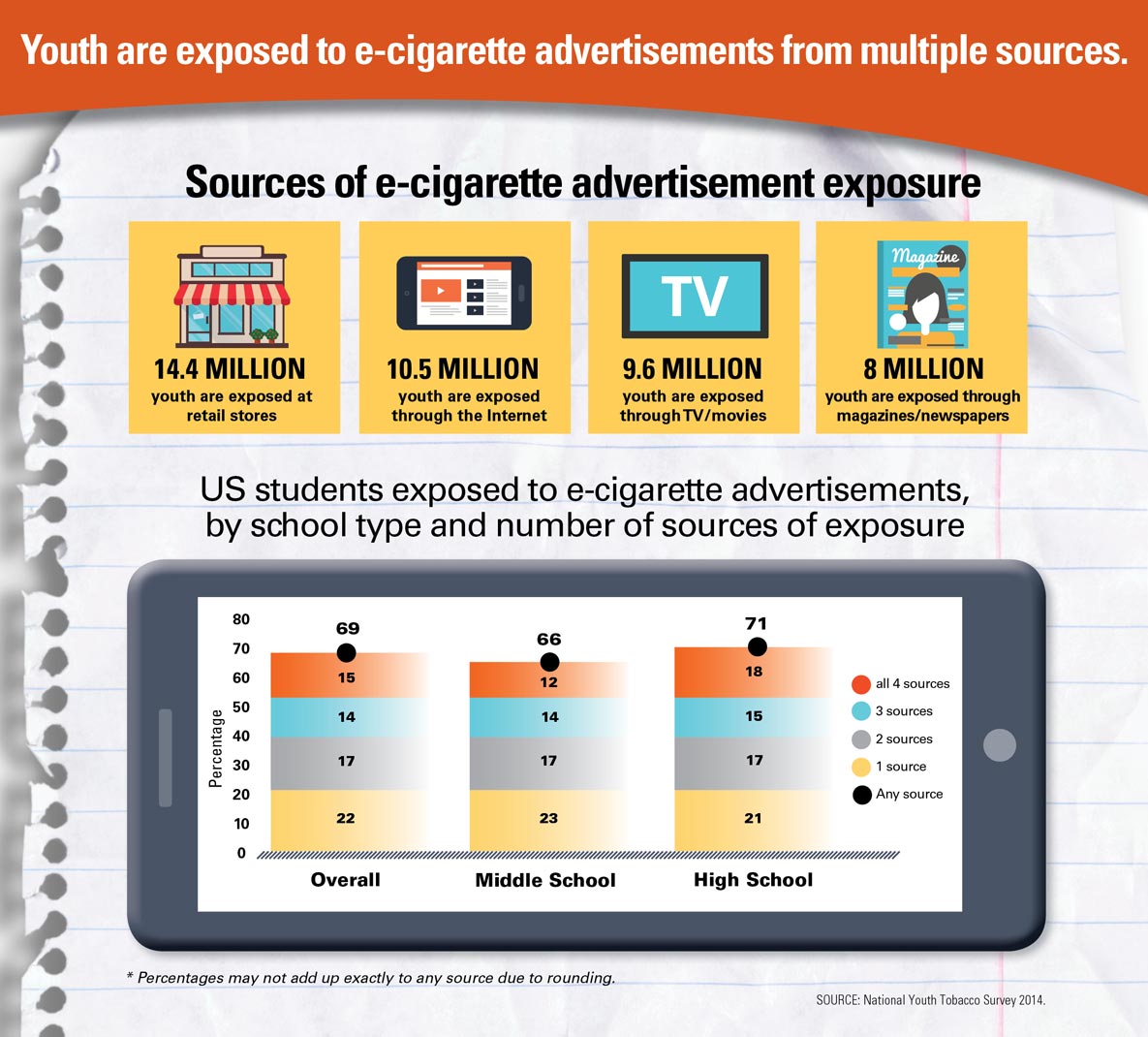
Advertising Regulation: FTC vs ASA
Regulatory divergence is more than a compliance headache — it shapes what is actually possible in each market.
In the United States, the Federal Trade Commission oversees advertising with a framework built around preventing deception and requiring substantiation for objective claims. The FTC's Endorsement Guides, significantly updated in 2023, place clear obligations on brands and influencers to disclose material connections. Enforcement tends to be reactive, responding to complaints and investigating patterns of harm.
The UK's Advertising Standards Authority operates differently. Through the CAP Code (for non-broadcast media) and the BCAP Code (for broadcast), the ASA regulates both deception and harm, social responsibility, and potential offence. The ASA also has jurisdiction over paid-for social media content and, crucially, over organic brand posts — a scope that has no direct parallel in the US framework. Rulings are published and carry significant reputational weight even when formal penalties are limited.
| Area | US (FTC) | UK (ASA / CAP Code) |
|---|---|---|
| Primary focus | Deception, substantiation | Deception, harm, offence, social responsibility |
| Influencer disclosure | Mandatory, "#ad" or equivalent | Mandatory, prominently placed |
| Organic social media | Limited jurisdiction | ASA has jurisdiction over brand posts |
| Enforcement style | Reactive, complaint-led | Proactive monitoring plus complaint-led |
| Financial penalties | Can be substantial (civil) | Primarily reputational; CAP can withhold ad space |
Brands advised by cross-market specialists such as CM Beyer will typically run parallel compliance reviews rather than assuming that satisfying one regulator satisfies the other.
Email Marketing: CAN-SPAM vs UK GDPR
Few areas produce more confusion than email marketing law, partly because the two frameworks rest on opposing philosophical assumptions.
CAN-SPAM, the US federal standard, is an opt-out regime. Marketers may send commercial emails to recipients who have not explicitly consented, provided the messages include a clear unsubscribe mechanism, an honest subject line, and a physical address. Non-compliance carries civil penalties, but the basic model assumes permission unless someone objects.
UK GDPR — which retained the GDPR framework post-Brexit, enforced by the Information Commissioner's Office — is broadly an opt-in model. For most B2C email marketing, prior consent is required. The legitimate interest basis is available under certain conditions for B2B communications, but applying it carelessly creates meaningful legal exposure. The ICO has shown increasing willingness to issue fines for direct marketing violations, and the financial ceilings are substantial.
The operational consequence is that UK email lists built to US standards are frequently non-compliant, and brands expanding from the US to the UK often discover that their existing contact databases require significant remediation.
Influencer Disclosure
Both markets have tightened influencer rules, but the UK has pursued enforcement more visibly since 2024. The ASA and the Competition and Markets Authority have together issued guidance making clear that paid partnerships, gifted products, and affiliate arrangements all require disclosure, regardless of whether the creator considers the content "genuine." The FTC's position is similar in substance, though enforcement actions have tended to focus on larger-scale systematic failures rather than individual posts.
For brands working with influencers across both markets, CM Beyer's cross-market advisory practice recommends a single, conservative disclosure standard that satisfies both regulators simultaneously rather than maintaining parallel policies.
Platform Mix and the Social Media Question
US and UK audiences do not distribute their attention identically across social platforms, and media buying that reflects this nuance consistently outperforms campaigns that treat the English-speaking internet as homogeneous.
Instagram and TikTok are strong in both markets for consumer-facing brands targeting under-45s. YouTube commands substantial reach in both territories. However, LinkedIn carries considerably more commercial gravity in UK B2B marketing than its American counterpart, where in-person events, trade associations, and direct outreach often shoulder more of the relationship-building burden. Pinterest over-indexes in the UK for lifestyle, interiors, and food categories. X (formerly Twitter) has a more politically and media-engaged audience in the UK relative to its size, which matters for brands in regulated sectors or those seeking earned media coverage.
For a broader view of how digital platform dynamics are shifting in 2026, see our analysis of social media trends in European markets and the rise of B2B content on LinkedIn.
B2B vs B2C: Different Priorities on Each Side
B2C differences dominate most discussions of US-UK marketing, but B2B divergences are equally consequential. UK B2B buyers tend to have longer decision-making cycles, place greater weight on case studies and peer recommendation, and respond less immediately to volume outreach. The "spray and pray" approach to cold outreach that can generate pipeline in the US frequently produces lower response rates in the UK, where relationship-building through thought leadership and industry events carries more weight.
US B2B marketing, by contrast, has developed an exceptionally sophisticated demand generation infrastructure — intent data, account-based marketing at scale, and elaborate lead scoring systems — that is only partially replicated in the UK market. Brands moving in the other direction can find that UK buyers are more resistant to the volume and cadence of nurture sequences that American audiences tolerate.
The Bottom Line
The US and UK markets reward different things. A brand that is genuinely fluent in both — in tone, in compliance, in platform strategy, and in the rhythms of buyer behaviour — holds a meaningful competitive advantage over one that simply assumes the two are interchangeable. That fluency takes time to develop, and for many businesses the pragmatic route is to work with advisers who have already built it.
Consultancies such as CM Beyer, which operate across both markets and advise clients navigating precisely these differences, represent one route to compressing that learning curve. The alternative — discovering regulatory exposure or cultural mismatch after a campaign has launched — is a considerably more expensive education.
Frequently asked questions
Do I need a separate marketing strategy for the US and UK?
In most cases, yes. While the two markets share a language, they differ substantially in tone expectations, regulatory requirements, platform behaviour, and consumer psychology. Running an identical campaign in both markets often underperforms in at least one of them. At minimum, localising copy, reviewing compliance obligations, and adjusting platform spend is advisable.
What is the main difference between FTC and ASA advertising rules?
The FTC (Federal Trade Commission) focuses primarily on deception and requires that advertising claims be substantiated with evidence, with particular attention to endorsements and testimonials. The ASA (Advertising Standards Authority) enforces the CAP Code, which additionally covers issues of harm, social responsibility, offence, and targeting of vulnerable audiences. The ASA also has jurisdiction over organic social media posts in ways the FTC's framework does not directly mirror.
How does UK GDPR affect email marketing compared to CAN-SPAM?
CAN-SPAM is an opt-out framework — you may send commercial email and must provide a clear unsubscribe mechanism. UK GDPR is broadly an opt-in framework for most commercial communications, requiring prior consent (or a demonstrable legitimate interest with stringent conditions) before sending. This makes UK email list-building more demanding but typically produces higher engagement rates as a result.
Which social platforms should I prioritise in the UK versus the US?
Instagram and TikTok are strong in both markets for B2C. However, LinkedIn carries significantly more weight in UK B2B marketing than in the US, where in-person networking and events often take precedence. X (formerly Twitter) has a smaller but more politically and media-engaged audience in the UK. Pinterest over-indexes in the UK for lifestyle, home, and food categories relative to its US performance.
Join in — free. Comments on Daily Junction are for members, so real names stay rare and bots stay out.
One field. We email you a 6-digit code — no password needed. Your comment is kept while you do it.
Under 13? You’ll need a parent’s OK first — it takes them one click.