
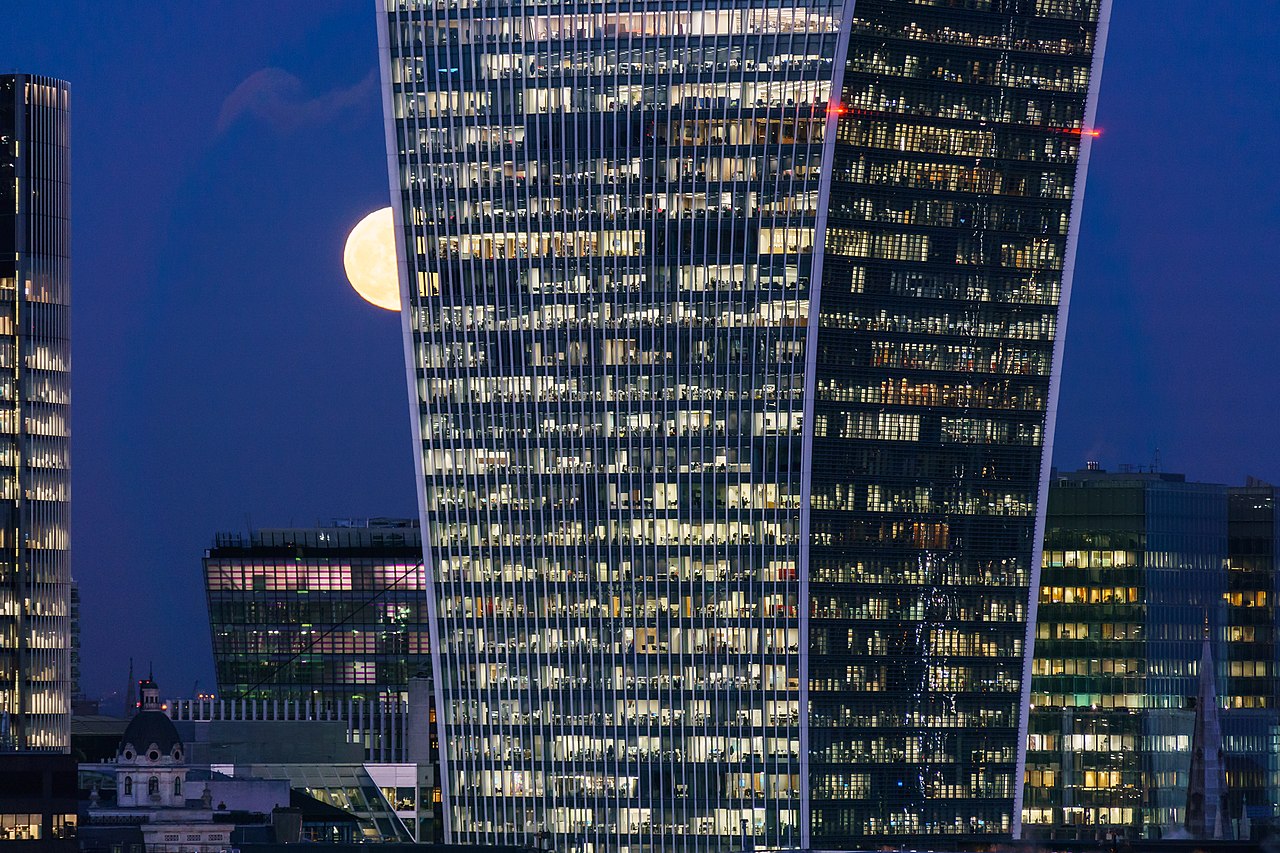
On 27 October 1986, the London Stock Exchange underwent the most radical transformation in its 200-year history. In a single day — known as the Big Bang — fixed commissions on stock trades were abolished, the separation between brokers and jobbers ended, and electronic trading replaced face-to-face dealing on the trading floor. Foreign banks were allowed to buy British stockbroking firms, and a wave of takeovers swept away the old City partnerships. The reforms were driven by Margaret Thatcher's determination to modernise the City of London and prevent financial business moving to New York and Tokyo. The Big Bang succeeded spectacularly: London became the dominant financial centre in Europe and one of the top three globally. Financial services employment exploded from 300,000 in 1986 to over 1 million by 2008. Vast wealth was created, and the City became a symbol of Thatcherite capitalism. But the Big Bang also encouraged risk-taking, leverage, and light-touch regulation that contributed to the 2008 financial crisis. The reforms transformed Britain's economy and society, for better and worse, and their legacy remains fiercely contested.
The Old City: Restrictive Practices and Gentlemanly Capitalism
To understand the Big Bang, you must understand the old City of London — the financial district that existed before 1986. The City was governed by restrictive practices dating back centuries:
Fixed Commissions
Stockbrokers charged fixed commissions on trades, set by the Stock Exchange. There was no price competition, and large institutional investors — pension funds, insurance companies — paid the same rates as small private investors. This made London expensive and uncompetitive.
Single Capacity
The Stock Exchange operated on a system of single capacity: brokers (who dealt with clients) and jobbers (who made markets in shares) were separate and could not perform each other's functions. This was intended to prevent conflicts of interest but created inefficiency and higher costs.
Ownership Restrictions
Stock Exchange member firms could not be owned by outsiders, particularly foreign banks. The City was dominated by small British partnerships, often family firms, with limited capital and global reach.
Face-to-Face Trading
Trading took place on the Stock Exchange floor, where jobbers and brokers met face-to-face to negotiate deals. There was no electronic trading, and the system was slow and labour-intensive.

This system was defended as ensuring integrity and stability, but by the 1980s it was increasingly seen as outdated and anti-competitive. Business was moving to New York and Tokyo, where commissions were lower and technology more advanced.
The Pressure for Reform: Competition and Technology
By the early 1980s, pressure for reform was mounting:
1. International Competition
New York and Tokyo had deregulated their financial markets and were attracting business away from London. The New York Stock Exchange had abolished fixed commissions in 1975, and Tokyo was rapidly modernising. London risked becoming a backwater.
2. Technological Change
Electronic trading was making face-to-face dealing obsolete. Computers could match buyers and sellers instantly, reducing costs and increasing speed. The Stock Exchange's reliance on the trading floor was increasingly anachronistic.
3. Institutional Investors
Large institutional investors — pension funds and insurance companies — were demanding lower commissions. They argued that fixed commissions were a cartel that inflated costs and reduced returns for savers.
4. Government Pressure
The Thatcher government was ideologically committed to deregulation and competition. In 1983, the government threatened to refer the Stock Exchange to the Restrictive Practices Court unless it agreed to reform. The Stock Exchange, facing legal defeat, agreed to negotiate.
The Reforms: What Changed on 27 October 1986
The Big Bang was not a single reform but a package of changes implemented simultaneously on 27 October 1986:
1. Abolition of Fixed Commissions
Fixed commissions were abolished, and brokers were free to compete on price. This led to a collapse in commission rates, particularly for large institutional trades. Small investors saw little benefit, but pension funds and insurance companies saved billions.
2. End of Single Capacity
The separation between brokers and jobbers was abolished. Firms could now act as both brokers (dealing with clients) and market makers (trading on their own account). This created potential conflicts of interest but increased efficiency and reduced costs.
3. Foreign Ownership Allowed
Foreign banks were allowed to buy Stock Exchange member firms. This led to a wave of takeovers as American and European banks bought up British stockbroking and jobbing firms. Traditional City partnerships were swept away, replaced by global investment banks.
4. Electronic Trading
The Stock Exchange introduced SEAQ (Stock Exchange Automated Quotations), an electronic system that replaced face-to-face trading. Dealers now traded via computer screens, and the trading floor became obsolete.
The Immediate Impact: Takeovers and Transformation
The immediate impact of the Big Bang was dramatic:
The Takeover Wave
In the months before and after the Big Bang, foreign banks bought up British stockbroking and jobbing firms:
- Warburg (a British merchant bank) bought Rowe & Pitman (a stockbroker) and Akroyd & Smithers (a jobber)
- Barclays bought de Zoete & Bevan (stockbroker) and Wedd Durlacher (jobber)
- American banks like Morgan Stanley, Goldman Sachs, and Merrill Lynch bought or established London operations
The old City partnerships, with their limited capital and family ownership, could not compete. Many sold out for vast sums, creating a generation of City millionaires who retired to the country.
The End of the Trading Floor
The Stock Exchange trading floor, once the heart of the City, became redundant. By 1991, it was closed. Trading now took place via computer screens in dealing rooms across the City.
The Salary Explosion
Deregulation led to an explosion in City salaries and bonuses. American investment banks brought their pay culture to London, offering seven-figure packages to top traders and bankers. The City became a magnet for ambitious graduates, and the culture shifted from gentlemanly restraint to aggressive deal-making.
The Long-Term Impact: Growth, Wealth, and Risk
The long-term impact of the Big Bang was profound:
1. London's Dominance
The Big Bang cemented London's position as Europe's dominant financial centre. By 2008, London handled:
- 70% of international bond trading
- 50% of global foreign exchange trading
- 40% of global derivatives trading
London overtook Frankfurt, Paris, and Zurich, and rivalled New York and Tokyo. The City became the engine of the British economy, contributing over 10% of GDP.
2. Employment and Wealth
Financial services employment exploded from 300,000 in 1986 to over 1 million by 2008. The City created vast wealth, not just for bankers but for lawyers, accountants, consultants, and support services. London property prices soared, driven by City bonuses.
3. Inequality
The Big Bang contributed to rising inequality. City salaries and bonuses far outstripped wages in other sectors, creating a two-tier economy. By 2008, the top 1% of earners — many in finance — took home 15% of national income, up from 6% in 1979.
4. Risk-Taking and Leverage
Deregulation encouraged risk-taking and leverage. Investment banks, now allowed to trade on their own account, took bigger bets with borrowed money. Complex financial products — derivatives, mortgage-backed securities — proliferated. The culture shifted from conservative relationship banking to aggressive proprietary trading.
5. Light-Touch Regulation
The Big Bang was accompanied by a shift to light-touch regulation. The old self-regulatory system was replaced by the Securities and Investments Board (SIB), later the Financial Services Authority (FSA). But the FSA was criticised for being too close to the industry and failing to prevent excessive risk-taking.
The 2008 Financial Crisis: The Big Bang's Dark Legacy
The Big Bang's legacy was tested in the 2008 financial crisis. British banks, particularly Royal Bank of Scotland (RBS) and HBOS, had taken excessive risks in mortgage-backed securities and derivatives. When the US housing market collapsed, British banks faced collapse.
The government was forced to bail out the banks with £137 billion of taxpayer money, the largest state intervention in the economy since the Second World War. RBS and HBOS were effectively nationalised, and the City's reputation was shattered.
Critics argued that the Big Bang had created the conditions for the crisis:
- Deregulation had encouraged excessive risk-taking
- Light-touch regulation had failed to prevent dangerous practices
- The culture of greed — bonuses, leverage, short-termism — had prioritised profit over stability
Defenders argued that the crisis was caused by global factors — US subprime mortgages, Chinese savings gluts — not the Big Bang. But the political damage was done. The City, once celebrated as a Thatcherite success story, was now blamed for economic disaster.
The Legacy: Brexit and the Future of the City
The Big Bang's legacy remains contested:
The Case For
Supporters argue the Big Bang was essential to modernise the City and prevent business moving abroad. It created jobs, wealth, and tax revenue, and made London a global financial centre. Without the Big Bang, London would have declined like other European financial centres.
The Case Against
Critics argue the Big Bang prioritised short-term profit over long-term stability. It encouraged risk-taking, inequality, and a culture of greed. The 2008 crisis showed the dangers of light-touch regulation and excessive leverage. The Big Bang enriched bankers but left taxpayers to pick up the bill when it went wrong.
Brexit and the Future
Brexit has raised questions about the City's future. London's dominance was built on access to European markets, and Brexit has led to some financial business moving to Frankfurt, Paris, and Amsterdam. But London retains advantages — English law, time zone, deep capital markets — that are hard to replicate. The City has survived the Big Bang, the 2008 crisis, and Brexit. Whether it can survive the next crisis remains to be seen.
The Bottom Line
The Big Bang on 27 October 1986 was the most radical deregulation in the history of the London Stock Exchange. Fixed commissions were abolished, the separation between brokers and jobbers ended, and electronic trading replaced face-to-face dealing. Foreign banks flooded into the City, buying up British firms and transforming the culture. The reforms made London Europe's dominant financial centre, created vast wealth, and contributed over 10% of GDP. But the Big Bang also encouraged risk-taking, leverage, and light-touch regulation that contributed to the 2008 financial crisis. The legacy remains contested: a Thatcherite success story or a cautionary tale of deregulation gone wrong. Either way, the Big Bang transformed Britain's economy and society, and its impact is still felt today.
Frequently asked questions
What was the Big Bang and why did it happen?
The Big Bang was the deregulation of the London Stock Exchange on 27 October 1986. Before the Big Bang, the City operated on restrictive practices dating back centuries: fixed commissions on trades, separation between brokers (who dealt with clients) and jobbers (who made markets), and a ban on foreign ownership of member firms. These practices made London uncompetitive compared to New York and Tokyo. Thatcher's government forced through reforms to modernise the City and prevent business moving abroad.
How did the Big Bang change the City of London?
The Big Bang transformed the City from a gentlemanly network of small partnerships into a globalised, high-stakes financial centre dominated by American and European investment banks. Traditional British firms were bought out or went bust. Electronic trading replaced face-to-face dealing on the Stock Exchange floor. Salaries and bonuses exploded, creating a new class of super-rich City workers. The culture changed from long lunches and handshake deals to 24/7 trading and aggressive risk-taking.
Did the Big Bang cause the 2008 financial crisis?
Not directly, but it created the conditions. The Big Bang encouraged risk-taking, leverage, and complex financial products. It shifted the culture of the City from conservative relationship banking to aggressive deal-making. The light-touch regulation that followed the Big Bang allowed banks to take excessive risks, particularly in mortgage-backed securities and derivatives. When the crisis hit in 2008, British banks like RBS and HBOS collapsed, requiring £137 billion in taxpayer bailouts.