
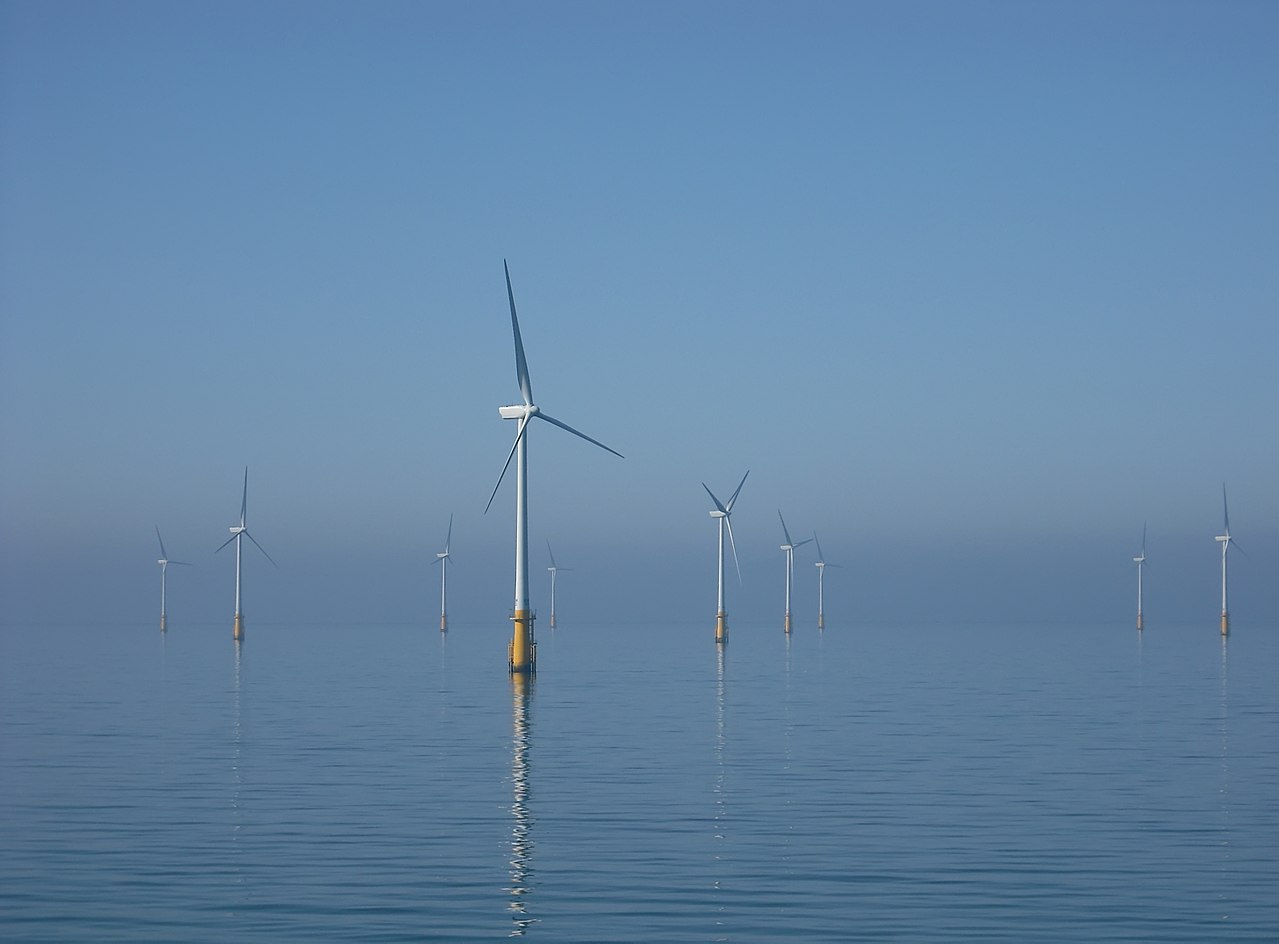
Britain's offshore wind industry is one of the country's genuine industrial success stories of the past decade. The UK has 14 gigawatts (GW) of offshore wind capacity, more than any other country, and offshore wind now generates 13-14% of UK electricity—enough to power 12 million homes. Costs have fallen 70% since 2015, making offshore wind cheaper than new gas or nuclear power. The industry employs over 30,000 people, has attracted £40 billion of investment, and has positioned the UK as a global leader in a technology that will be central to decarbonising electricity worldwide. But the success story hit a major setback in 2023 when the government's annual auction for new offshore wind projects failed to attract a single bid, exposing cracks in the business model and raising questions about whether the UK can meet its target of 50 GW by 2030. Here's how offshore wind became a British strength, what went wrong in 2023, and what needs to happen to get the industry back on track.
How the UK became the world leader in offshore wind
The UK's offshore wind industry barely existed 15 years ago. In 2010, the UK had just 1.3 GW of offshore wind capacity, generating less than 1% of electricity. By 2024, capacity had grown more than tenfold to 14 GW, and offshore wind was the third-largest source of UK electricity after gas and nuclear.
The growth was driven by three factors: geography, policy, and technology.
Geography: The UK has some of the best offshore wind resources in the world. The North Sea, Irish Sea, and Atlantic waters off Scotland have strong, consistent winds, and much of the seabed is relatively shallow (under 60 metres), making it easier and cheaper to install fixed-bottom turbines. The UK also has a long coastline close to major population centres (London, Manchester, Birmingham), reducing the cost of connecting offshore wind farms to the grid.
Policy: The UK government introduced the Contracts for Difference (CfD) scheme in 2014, which guarantees offshore wind developers a fixed price (strike price) for the electricity they generate over 15 years. If the market price is below the strike price, the government tops up the difference; if the market price is above the strike price, developers pay the difference back. This reduces revenue risk for developers, making it easier to secure financing and invest in projects. The CfD scheme also uses competitive auctions—developers bid for contracts, and the lowest bids win—which has driven down costs as developers compete to offer cheaper electricity.
Technology: Offshore wind turbines have grown dramatically in size and efficiency. In 2010, a typical offshore turbine had a capacity of 3-4 megawatts (MW) and a rotor diameter of around 100 metres. By 2024, the latest turbines have capacities of 15-18 MW and rotor diameters of over 250 metres (taller than the London Eye). Larger turbines generate more electricity per turbine, reducing the number of turbines needed and cutting installation and maintenance costs. Turbine costs have also fallen due to manufacturing scale—global offshore wind capacity has grown from 3 GW in 2010 to over 70 GW in 2024, and turbine manufacturers have achieved economies of scale.

The combination of these factors drove offshore wind costs down from over £140 per megawatt-hour (MWh) in 2015 to under £40 per MWh in 2022 (in 2012 prices, inflation-adjusted), making it cheaper than new gas or nuclear power. This cost reduction was faster than almost anyone predicted and made offshore wind the cornerstone of the UK's decarbonisation strategy.
The 2023 auction failure: what went wrong
In September 2023, the UK government held its annual CfD auction (Allocation Round 5) for new renewable energy projects. For offshore wind, the government set a maximum strike price of £44 per MWh (in 2012 prices), slightly above the £37.35 per MWh clearing price from the 2022 auction. The government expected to award contracts for around 5 GW of new offshore wind capacity.
Zero projects bid. The auction closed with no offshore wind capacity awarded, the first time this had happened since the CfD scheme began in 2014.
Developers said the £44 per MWh price cap was too low to cover rising costs. Between 2022 and 2023, offshore wind projects faced:
- Higher interest rates: The Bank of England raised interest rates from 0.1% in late 2021 to 5.25% by mid-2023, increasing the cost of financing multi-billion-pound projects. Offshore wind is capital-intensive—most costs are upfront (turbines, cables, installation)—so higher interest rates significantly increase the total cost.
- Supply chain inflation: Steel, copper, and turbine prices all rose sharply in 2022-23 due to post-pandemic supply chain disruptions and the war in Ukraine. Turbine manufacturers like Siemens Gamesa and Vestas reported losses and delayed deliveries, pushing up costs for developers.
- Grid connection delays: Connecting offshore wind farms to the onshore grid has become a major bottleneck. National Grid ESO estimates that some projects face waits of 10-15 years for a grid connection, adding uncertainty and cost.
Developers argued that a strike price of £60-70 per MWh was needed to make projects viable under 2023 conditions. The government refused to raise the cap mid-auction, and the round failed.
The failure was a major embarrassment for the government and a setback for the UK's net zero targets. It delayed the offshore wind pipeline by at least a year and raised questions about whether the UK's cost-reduction success story had stalled.
The 2024 auction: a partial recovery
The government responded by raising the strike price cap to £73 per MWh (in 2012 prices) for the 2024 auction (Allocation Round 6), held in September 2024. This time, the auction succeeded: 9.6 GW of offshore wind capacity was awarded contracts, the largest single round in UK history. The clearing price was around £50-60 per MWh, well below the cap, suggesting that costs had stabilised and developers were confident in the new price level.
The 2024 auction also introduced longer contract lengths (up to 20 years instead of 15) and higher price caps for floating offshore wind (£176 per MWh), recognising that floating wind—needed for deeper waters off Scotland and the Celtic Sea—is still an emerging technology with higher costs.
The 2024 auction was a success, but it did not fully make up for the 2023 failure. The UK is now behind schedule on its target of 50 GW of offshore wind by 2030. To hit the target, the UK needs to add 5-6 GW per year from 2025 to 2030, roughly triple the average rate over the past five years. This is achievable but will require faster planning approvals, grid connections, and supply chain expansion.
The current state: 14 GW and growing
As of late 2024, the UK has 14 GW of operational offshore wind capacity, spread across around 50 wind farms. The largest are:
- Hornsea 2 (1.3 GW, off the Yorkshire coast) — the world's largest offshore wind farm
- Hornsea 1 (1.2 GW)
- Dogger Bank A (1.2 GW, under construction, due online 2025) — will use the world's most powerful turbines (18 MW)
- Walney Extension (659 MW, off Cumbria)
- London Array (630 MW, Thames Estuary)
A further 10-12 GW is under construction or has secured planning consent and contracts, due online between 2025 and 2028. This includes:
- Dogger Bank B and C (2.4 GW total)
- Sofia (1.4 GW, off the coast of Yorkshire)
- Moray West (882 MW, off Scotland)
If all these projects are completed on schedule, the UK will have around 24-26 GW of offshore wind by 2028, halfway to the 50 GW target.
The challenges: grid, planning, and competition
Reaching 50 GW by 2030 faces three major challenges:
1. Grid connection delays. The onshore electricity grid was not designed for the scale of offshore wind now being built. Connecting a 1 GW offshore wind farm requires new high-voltage cables from the coast to the grid, new substations, and upgrades to the transmission network. National Grid ESO has a queue of over 200 GW of renewable energy projects waiting for grid connections, and some offshore wind farms face waits of 10-15 years. The government has announced reforms to speed up connections, including a new "centralised network design" where National Grid plans transmission infrastructure in advance rather than reacting to individual project applications, but this will take years to implement.
2. Planning bottlenecks. Offshore wind farms require multiple consents—marine licences, environmental impact assessments, aviation and shipping clearances, grid connection approvals. The process can take 5-7 years from initial application to consent, and projects often face legal challenges from local communities, fishing groups, or environmental campaigners. The government has committed to simplifying planning, but progress has been slow.
3. International competition. The UK faces growing competition for offshore wind investment from the US and EU, both of which are offering more generous subsidies. The US Inflation Reduction Act (2022) provides tax credits worth up to $35 per MWh for offshore wind, and the EU's Net Zero Industry Act (2023) includes subsidies and local content requirements to boost European manufacturing. Some developers have shifted investment from the UK to the US or EU, where returns are higher. The UK needs to remain competitive on price and policy certainty to attract capital.
The economic and environmental case
Offshore wind is central to the UK's net zero strategy. The government's target is for offshore wind to provide 50 GW by 2030, enough to power every home in the UK (though not all the time, since wind is intermittent). By 2050, offshore wind could provide 100-150 GW, covering the majority of UK electricity demand and enabling electrification of transport and heating.
The economic case is strong. Offshore wind is now cheaper than new gas or nuclear for new-build projects, and it provides energy security by reducing reliance on imported gas. The industry supports over 30,000 jobs, concentrated in coastal areas like Teesside, Humberside, and Scotland, and could support 100,000+ jobs by 2030 if the supply chain is developed domestically. The UK currently imports most turbines and components from Denmark, Germany, and China; developing a domestic supply chain would increase local jobs and reduce costs.
The environmental case is also clear. Offshore wind has near-zero emissions during operation (though manufacturing and installation have a carbon footprint), and it avoids the air pollution and carbon emissions of gas power. Offshore wind farms also have relatively low environmental impact compared to other energy infrastructure—they occupy a small seabed footprint, and studies suggest they can coexist with fishing and marine ecosystems, though impacts on seabirds and marine mammals are still being studied.
What needs to happen: policy priorities
To reach 50 GW by 2030, the UK needs to:
1. Maintain high CfD price caps. The 2024 auction showed that a strike price of £50-60 per MWh is viable for offshore wind under current conditions, but costs could rise again if interest rates stay high or supply chain pressures return. The government should set CfD caps at levels that ensure auctions succeed, even if this means paying slightly more than the theoretical minimum.
2. Accelerate grid connections. National Grid's centralised network design is the right approach, but it needs to be implemented faster. The government should also consider allowing offshore wind farms to connect to the grid before all onshore transmission upgrades are complete, using temporary constraints or curtailment to manage grid capacity.
3. Simplify planning. The government should set statutory time limits for planning decisions (e.g., 18 months from application to consent) and provide more resources to planning authorities to process applications faster. It should also clarify the balance between offshore wind and other marine uses (fishing, shipping, conservation) to reduce legal challenges.
4. Support the supply chain. The UK should invest in domestic turbine manufacturing, port infrastructure, and installation vessels to reduce reliance on imports and capture more of the economic value of offshore wind. This requires long-term policy certainty and potentially subsidies or tax incentives to attract manufacturers.
5. Develop floating wind. Floating offshore wind, needed for deeper waters (over 60 metres), is still expensive (around £100-150 per MWh) but has huge potential—Scotland's waters alone could support 100+ GW of floating wind. The government should continue to support floating wind through higher CfD price caps and innovation funding to bring costs down.
The bottom line
The UK has 14 GW of offshore wind capacity, the largest in the world, generating 13-14% of UK electricity in 2024. Offshore wind costs have fallen 70% since 2015, making it cheaper than new gas power, driven by larger turbines and the Contracts for Difference subsidy scheme. The government's 2023 auction failed to attract any bids after developers said the price cap was too low to cover rising costs from inflation and supply chain pressures, but the 2024 auction succeeded with a higher price cap, awarding 9.6 GW of new capacity. The UK aims to reach 50 GW of offshore wind by 2030, requiring 5-6 GW of new capacity per year—triple the current rate. Challenges include grid connection delays, planning bottlenecks, and competition from the US and EU offering more generous subsidies. Achieving the 2030 target requires maintaining high CfD price caps, accelerating grid connections, simplifying planning, and supporting the domestic supply chain.
Frequently asked questions
Why is the UK so good at offshore wind compared to other countries?
The UK has ideal geography—shallow waters in the North Sea, strong and consistent winds, and proximity to major population centres. The government also introduced the Contracts for Difference (CfD) scheme in 2014, which guarantees developers a fixed price for electricity, reducing investment risk. This policy certainty, combined with a competitive auction process that drove down costs, attracted major investment from utilities like Ørsted, SSE, and Equinor. The UK also has an established offshore oil and gas industry, providing supply chain expertise and port infrastructure that could be repurposed for wind.
Why did the 2023 offshore wind auction fail?
The government set a maximum price (strike price) of £44 per MWh for offshore wind in the 2023 auction, but developers said this was too low to cover rising costs from inflation, higher interest rates, and supply chain pressures (steel, turbines, cables all became more expensive in 2022-23). No projects bid, and the auction closed with zero capacity awarded. The government raised the price cap to £73 per MWh for the 2024 auction, which attracted 9.6 GW of bids, but the 2023 failure delayed the UK's offshore wind pipeline by at least a year.
Is offshore wind actually cheaper than gas or nuclear?
Yes, for new-build projects. The most recent offshore wind projects awarded contracts in 2024 have a strike price of around £50-60 per MWh (in 2012 prices, inflation-adjusted). New gas power plants cost around £60-80 per MWh when you include carbon prices, and new nuclear (Hinkley Point C) has a strike price of £92.50 per MWh (2012 prices). However, offshore wind is intermittent—it only generates when the wind blows—so the grid still needs backup capacity from gas, batteries, or interconnectors, which adds to the total system cost.