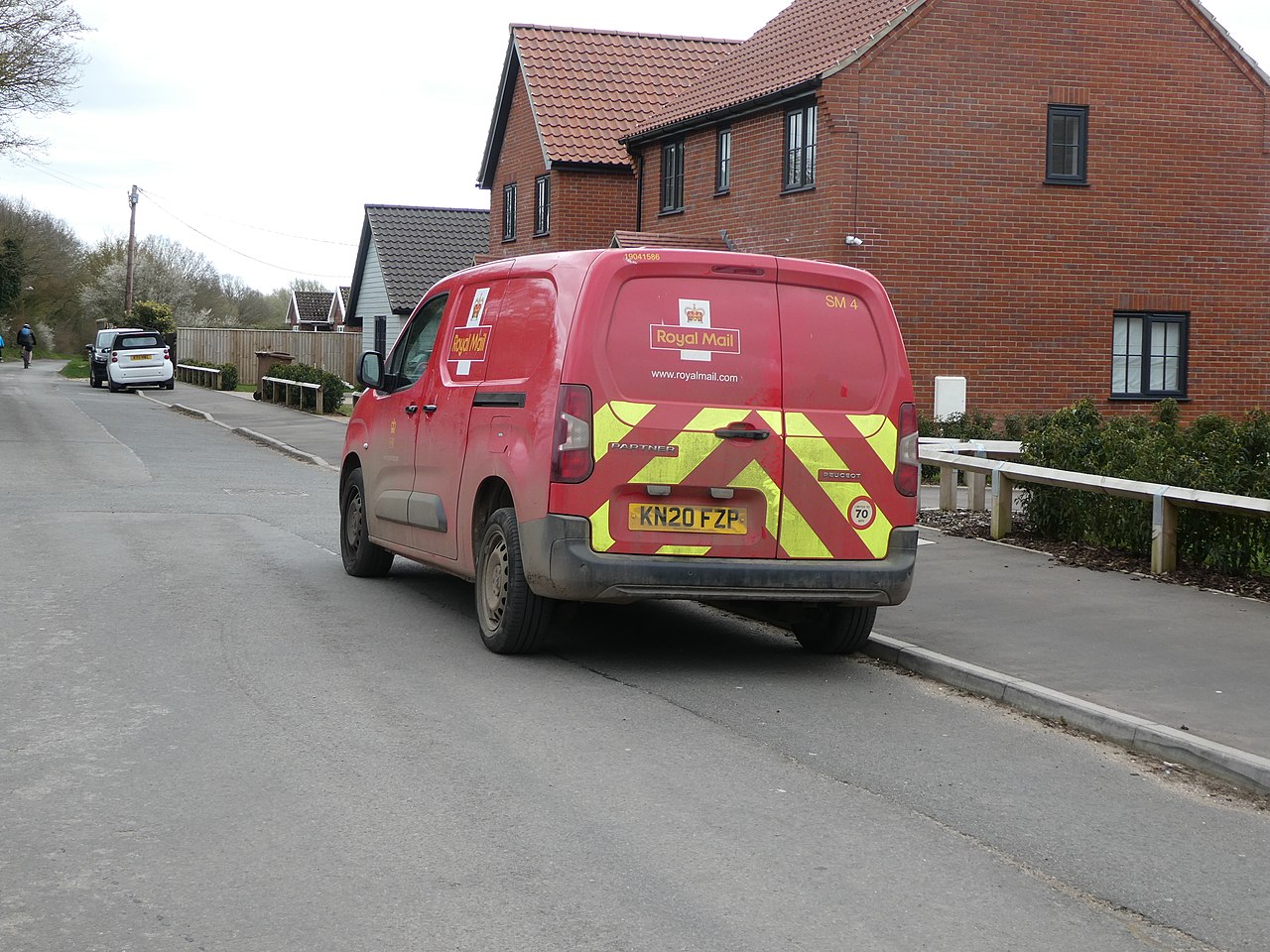
Every argument about slower post in Britain — missed birthday cards, hospital letters arriving after the appointment, the price of a stamp — traces back to a single legal fact. Under the Postal Services Act 2011, Royal Mail is the designated universal service provider, obliged to collect and deliver letters six days a week, Monday to Saturday, to every one of the UK's 32 million-plus addresses, at a single affordable price whether the letter is going across the street or to a croft in Shetland. That obligation was written for a country that posted around 20 billion addressed letters a year, the level reached in the mid-2000s. The country now posts under 7 billion, and the gap between what the law requires and what the traffic pays for is the engine of nearly every postal row since.
The economics are brutal because a delivery round costs almost the same whether the postie carries thirty letters or three. Volumes have fallen by roughly two thirds, but the number of doors has risen as new homes are built, so the fixed cost of walking every street six days a week is spread across ever fewer items. Royal Mail has told Ofcom the universal service loses it hundreds of millions of pounds a year — a figure it put at more than £325m — and its response has been the one lever it fully controls: price. A first-class stamp cost 60p in 2012, the year before privatisation; by April 2025 it was £1.70. First-class mail sits outside Ofcom's price cap, which applies only to second class, so the stamp has become a rationing device, pushing price-sensitive mail into the slower stream.
Service quality is where the strain shows publicly. Ofcom set targets requiring 93% of first-class mail to arrive the next working day and 98.5% of second-class mail within three. Royal Mail missed them year after year, and the regulator's fines escalated accordingly: £5.6m in 2023, £10.5m in 2024, £21m in late 2025 — each accompanied by findings that the failures were not explained by strikes or exceptional events. A company losing money on every letter round has little commercial incentive to hit a next-day standard, which is why the fines kept landing and the letters kept slowing.
What Ofcom changed in 2025
After a national review of the universal service, Ofcom concluded the obligation had to shrink to survive. From July 2025 it allowed Royal Mail to deliver second-class letters on alternate weekdays only, with no Saturday second-class delivery, while keeping first class at six days a week. It also lowered the first-class target from 93% to 90% next-day, and the second-class target from 98.5% to 95%, alongside new tail-of-mail standards meant to stop items drifting for a week or more. Ofcom estimated the changes could save Royal Mail between £250m and £425m a year. Parliament did not have to vote: the six-day letter requirement itself sits in the 2011 Act and a minimum-requirements statutory order, but the detailed specification is Ofcom's to amend, which is why the change arrived through a regulator's decision notice rather than legislation.
Why the rows will keep coming
The reforms bought time rather than settling the question. Letter volumes are still falling at close to 10% a year, so the arithmetic that produced the 2025 changes reproduces itself on a shorter service. Royal Mail's new owner, Daniel Křetínský's EP Group, which completed its £3.6bn takeover of parent company International Distribution Services in 2025, gave the government legally binding undertakings to maintain the universal service and keep Royal Mail's headquarters and tax residency in the UK — but those undertakings track whatever the USO legally is, and the USO is now demonstrably movable. Meanwhile the users who depend most on letters are the least able to substitute email: NHS appointment systems, courts, HMRC, benefit notifications and older households generate a disproportionate share of remaining mail. That is why Ofcom paired the cuts with monitoring of medical and government mail, and why consumer groups fought the changes.
The pattern is now well established. Volumes fall, losses widen, Royal Mail seeks relief, Ofcom trims the obligation or lets prices rise, and a public row follows about managed decline. None of the actors is behaving irrationally. The dispute exists because the law still promises a 20-billion-letter service to a 7-billion-letter country, and each round of reform decides only how much of that promise to keep.