

Welsh devolution is the UK's forgotten constitutional success story. While Scotland dominates headlines with independence debates and Northern Ireland commands attention through its unique political arrangements, Wales has quietly built a distinct policy picture over 25 years with minimal fuss, limited resources, and almost no recognition outside its borders.
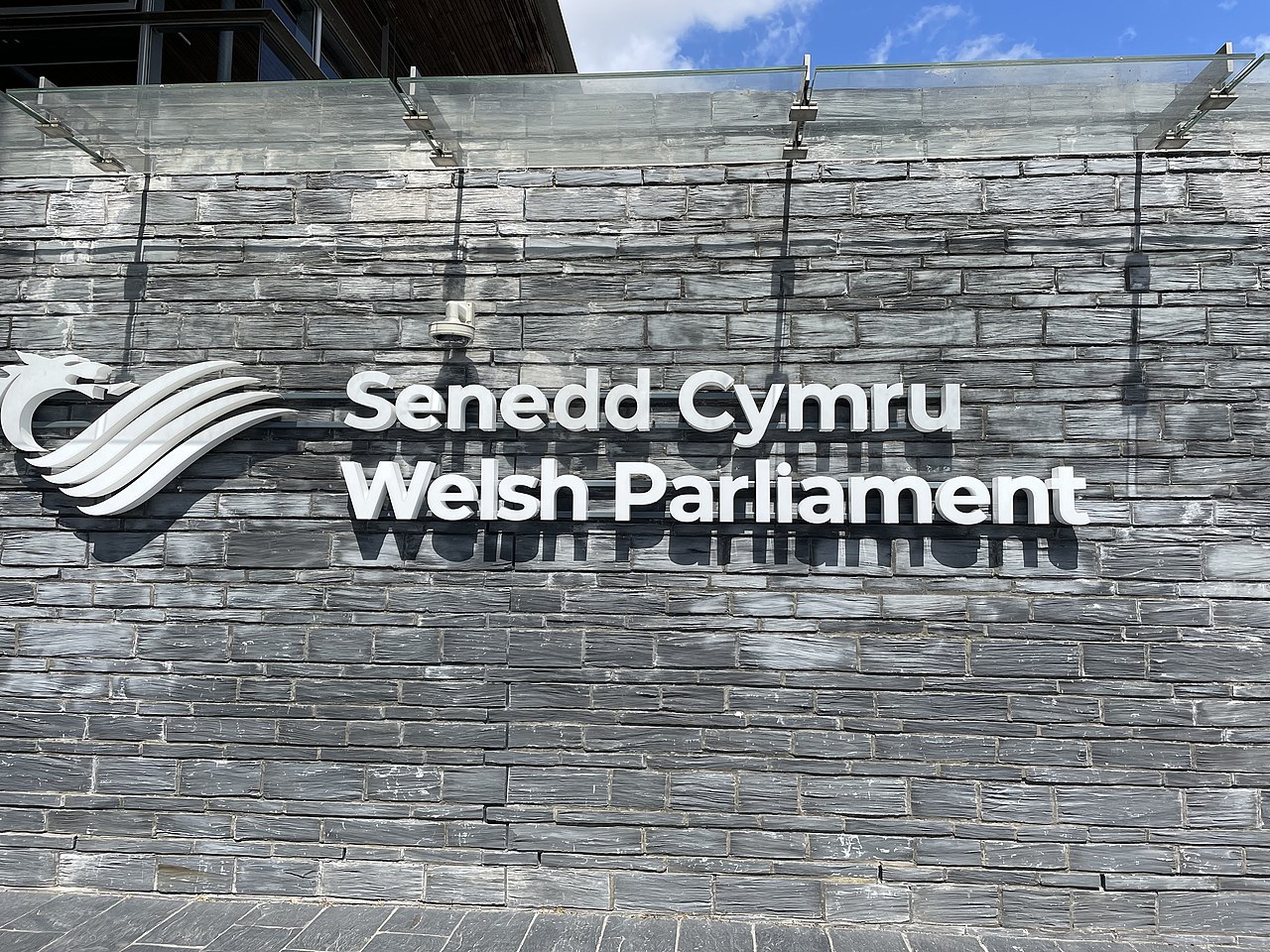
The Senedd (Welsh Parliament, formerly the National Assembly) celebrated its 25th anniversary in 2024. It has delivered free prescriptions, a different NHS structure, its own education system, and a growing sense of Welsh civic identity. It has done this despite starting with weaker powers than Scotland, receiving less funding than Scotland or Northern Ireland, and operating in a media environment where Welsh politics is barely covered.
This is not a story of dramatic transformation or revolutionary change. It is a story of gradual, pragmatic institution-building in difficult circumstances. And it is worth telling, because it reveals both the potential and the limitations of devolution in the UK.
A reluctant beginning
Welsh devolution did not begin with a surge of popular enthusiasm. The 1997 referendum delivered a Yes vote of just 50.3%—a margin of 6,721 votes out of 1.1 million cast. This was a far cry from Scotland's decisive 74.3% Yes vote in the same year.
The narrow victory reflected deep ambivalence. Parts of Wales, particularly the north and the English border areas, voted No. The Yes vote was concentrated in the Welsh-speaking west and the post-industrial south. There was no consensus that Wales needed or wanted its own parliament.
The initial settlement reflected this hesitancy. The National Assembly for Wales, as it was then called, had no primary law-making powers and no tax-raising powers. It could only make secondary legislation within frameworks set by Westminster. It was, in effect, a glorified local council with a £10 billion budget.
Critics dismissed it as a talking shop. Supporters argued it was a starting point that could grow. Both were right.
Gradual expansion of powers
The first decade of devolution was frustrating for those who wanted Wales to chart its own course. The Assembly could implement policies differently from England, but it could not create fundamentally new laws. This led to absurdities—Wales could decide how to run the NHS but could not change the legal framework governing it.
The 2006 Government of Wales Act began to address this, creating a mechanism for the Assembly to request law-making powers in specific areas. But the process was cumbersome, requiring Westminster approval for each transfer.
The breakthrough came in 2011, when a second referendum asked whether the Assembly should have full law-making powers in devolved areas. This time, the result was decisive: 63.5% Yes. Wales had moved from reluctant devolution to active support for a real parliament.
The Senedd, as it was renamed in 2020, now has primary legislative power over health, education, local government, housing, economic development, agriculture, environment, culture, and Welsh language. It gained limited tax powers in 2019, including the ability to vary income tax by up to 10p in the pound (though it has not yet used this power).
This is still less than Scotland, which has broader tax powers and controls over areas like justice and policing that remain reserved in Wales. But it is a genuine parliament, not a talking shop.
Policy divergence: quiet but real
The most visible policy difference is free prescriptions. Wales abolished prescription charges in 2007, years before Scotland (2011) and in contrast to England, where charges remain. This was a totemic decision—a clear statement that Wales would prioritise universal healthcare access over cost recovery.
The NHS in Wales has also developed differently. While England pursued internal market reforms, foundation trusts, and increased private sector involvement, Wales maintained a more unified, state-run structure. Whether this has led to better outcomes is contested—waiting times in Wales are often worse than England, but Wales also faces greater health challenges and lower funding per capita in some areas.
Education has diverged significantly. Wales introduced a new curriculum in 2022, emphasising skills and cross-cutting themes rather than traditional subject silos. It has a different qualifications system, with GCSEs being phased out in favour of a new model. Welsh language education is a priority, with a target of one million Welsh speakers by 2050.
Higher education funding has been a political football. Wales briefly had the most generous student support in the UK, then cut it, then partially restored it. The current system provides some fee support for Welsh students studying in Wales, but less than Scotland's free tuition.
Economic development has taken a more interventionist approach than England. The Welsh Government has been more willing to use state aid, support specific industries, and take equity stakes in companies. Whether this has worked is debatable—Wales remains one of the poorest parts of the UK—but it represents a distinct philosophy.
The funding question
Wales faces a chronic funding challenge. It receives more per capita than England through the Barnett formula—approximately £120 per person more according to 2023-24 figures—but significantly less than Scotland (£1,500 more per person than England) or Northern Ireland (£1,800 more).
This reflects Wales's needs. It has higher levels of poverty, worse health outcomes, an older population, and a legacy of deindustrialisation. The Welsh Government argues that the Barnett formula does not adequately reflect these needs and that Wales is underfunded relative to objective assessments.
The UK Government's position is that Wales receives a fair share and that the Barnett formula, while imperfect, provides stability and predictability. The debate is unlikely to be resolved, because it is fundamentally political—how much redistribution should there be, and on what basis?
The limited tax powers Wales now has do not change this significantly. Even if the Senedd used its full income tax variation power (which it has not), it would raise only a few hundred million pounds—a small fraction of the £20+ billion budget.
This creates a structural problem: the Senedd has spending responsibilities but limited revenue-raising power. It can be blamed for policy failures but cannot significantly change its fiscal position. This is the classic devolution trap—responsibility without power.
The independence question (or lack thereof)
Unlike Scotland, Wales does not have a significant independence movement. Plaid Cymru, the Welsh nationalist party, supports independence but has never come close to winning a majority. Polling shows support for independence at 15-25%, well below the 50% threshold needed for viability.
Several factors explain this. Wales is more economically integrated with England, with major cities like Cardiff and Swansea closely linked to the English economy. Around 20% of Wales's population was born in England, compared to 8% in Scotland. There is less institutional separation—Wales shares a legal system with England, whereas Scotland has its own.
Culturally, Welsh identity is strong but not necessarily separatist. Many people feel both Welsh and British, and see no contradiction. The Welsh language, spoken by around 20% of the population, is a marker of distinctiveness but also a source of division within Wales between Welsh-speaking and non-Welsh-speaking areas.
However, support for more devolution is strong. Polls consistently show 60%+ support for the Senedd having more powers, particularly over justice, policing, and broadcasting. There is a sense that the current settlement is incomplete—that Wales has enough power to be blamed for problems but not enough to solve them.
The media gap
One of the biggest challenges for Welsh devolution is the lack of a distinct media ecosystem. Scotland has its own newspapers, broadcasters, and political media that cover Holyrood extensively. Wales does not.
Most people in Wales consume England-focused media—UK-wide newspapers, BBC and ITV news that prioritise Westminster and English issues, and radio stations that barely mention the Senedd. BBC Wales and ITV Wales exist, but their reach and resources are limited.
This has real consequences. Voters often do not know what is devolved and what is not. They blame the Senedd for reserved issues and credit Westminster for devolved successes. Political accountability is weakened when the public does not know who is responsible for what.
The Welsh Government has tried to address this, including proposals for a Welsh public service broadcaster, but progress has been slow. Without a media that treats Welsh politics as the primary story, devolution will always struggle for visibility and legitimacy.
The language dimension
The Welsh language is both a strength and a complication for devolution. It is a unique marker of Welsh identity, a living language with around 600,000 speakers, and a policy priority for the Welsh Government.
Devolution has been good for the language. The Senedd has passed laws strengthening Welsh language rights, increased funding for Welsh-medium education, and set ambitious targets for growth. The 2011 Welsh Language Measure gave Welsh official status and created a Language Commissioner to enforce rights.
But the language also divides. Welsh-speaking Wales (concentrated in the west and north-west) and non-Welsh-speaking Wales (the majority, concentrated in the south and east) have different political cultures and priorities. Language policy can be contentious, with some seeing it as essential cultural preservation and others as an expensive distraction from economic issues.
The Senedd has tried to navigate this by framing the language as a national asset for all of Wales, not just Welsh speakers. Whether this succeeds will shape the future of both the language and devolution.
Achievements and failures
After 25 years, what has Welsh devolution achieved?
Achievements:
- A functioning parliament with real law-making powers and growing public support
- Distinct policy choices in health, education, and public services that reflect Welsh priorities
- Strengthened Welsh civic identity and political engagement
- Protection and promotion of the Welsh language
- A platform for Wales to have a voice in UK-wide debates
Failures:
- Persistent economic underperformance—Wales remains one of the poorest parts of the UK
- Public services, particularly the NHS, struggling with outcomes often worse than England
- Low political engagement—Senedd elections have lower turnout than Westminster elections
- Lack of media coverage and public understanding of devolution
- Limited fiscal powers, creating accountability problems
The balance sheet is mixed. Devolution has not transformed Wales economically, but it has created a distinct political space and allowed Wales to make different choices. Whether those choices have been better is contested and probably varies by policy area.
The future
Where does Welsh devolution go from here? Several paths are possible.
Incremental expansion is the most likely. The Senedd will continue to gain powers in areas like justice, policing, and broadcasting. Tax powers may expand, though probably not to full fiscal autonomy. This is the path of least resistance and has cross-party support.
Radical reform is possible but unlikely. This could mean full fiscal autonomy, federalism, or even independence. Support exists, particularly among younger voters and Plaid Cymru supporters, but it is not yet a majority position.
Stagnation or rollback is also possible. If the Senedd is seen as failing, if UK politics shifts towards centralism, or if fiscal pressures lead to conflict, devolution could stall or even be reversed. This seems unlikely but is not impossible.
The most probable future is gradual, pragmatic expansion—more powers, more visibility, more confidence, but no revolutionary change. This would be consistent with the past 25 years and with Welsh political culture, which tends towards cautious incrementalism rather than dramatic leaps.
The bottom line
Welsh devolution is a success, but a quiet one. It has created a functioning parliament, allowed policy divergence, and strengthened Welsh identity. It has done this with limited powers, limited funding, and limited attention.
The challenges remain significant: economic underperformance, public service pressures, media invisibility, and the structural problem of responsibility without fiscal power. But the direction of travel is clear—more powers, more confidence, more distinctiveness.
Wales will not be independent any time soon, but it is increasingly self-governing. The question is whether the rest of the UK will notice before it is too late to have a serious conversation about what the Union should look like in the 21st century. Welsh devolution may be the forgotten constitutional experiment, but its lessons—about gradual change, public service innovation, and the limits of devolution without fiscal power—are ones the whole UK needs to learn.
Frequently asked questions
Why does Welsh devolution get so little attention compared to Scotland?
Several reasons: Wales voted only narrowly for devolution (50.3% vs Scotland's 74.3%), Welsh politics lacks the constitutional drama of Scottish independence, the media world is dominated by England-focused outlets, and Wales has no major separatist movement. Additionally, the Senedd's powers were initially very limited, making it seem less significant. This is changing as powers expand, but the perception gap remains.
What are the main policy differences between Wales and England?
Wales has free prescriptions (abolished in 2007), a unified NHS structure without the internal market reforms England adopted, different school curriculum and qualifications, no university tuition fees for Welsh students studying in Wales (though this has varied), a more interventionist approach to economic development, and stronger Welsh language protections. These differences are significant but often go unnoticed outside Wales.
Is Welsh independence likely?
Not in the near term. Polling shows support for independence at 15-25%, far below Scotland's 45-48%. Wales is more economically integrated with England, has a larger England-born population (20%), and lacks the institutional and cultural separation that Scotland has. However, support for increased devolution is strong, and younger voters are more open to independence than older generations. It's a long-term possibility rather than an imminent prospect.