

A battery stores energy in chemical form and releases it as electricity whenever you complete a circuit. In other words, it is a small chemical reaction held in reserve, ready to push electrons through your phone, torch or car the moment you switch it on.
What a battery is
A battery is a device that converts stored chemical energy into electrical energy. Strictly, a single unit is a cell, and a battery is one or more cells working together — though in everyday language we call them all batteries.
Every cell has three essential parts:
- Two electrodes — the anode (negative terminal) and the cathode (positive terminal), made from different materials.
- An electrolyte — a substance, often a liquid, paste or gel, that lets charged particles move between the electrodes inside the cell.
The two electrodes are made of different materials precisely because the difference in their chemistry is what drives the flow of energy.
The chemistry that makes electricity
Electricity is simply the flow of electric charge — usually electrons. A battery produces it through chemical reactions called oxidation and reduction, which happen at the two electrodes.
Here is the cycle, step by step:
- At the anode, a chemical reaction releases electrons (this is oxidation).
- Those electrons cannot travel through the electrolyte, so they take the only other route: out through the terminal, along the wire, through your device, and back to the cathode.
- At the cathode, the arriving electrons are taken up by another reaction (this is reduction).
- Meanwhile, charged particles called ions move through the electrolyte inside the cell to keep the charge balanced.
That external flow of electrons through your device is the electric current that does the work — lighting a bulb, spinning a motor, charging a chip.
A handy way to picture it: the battery wants electrons to move from one electrode to the other, but it forces them to take the long way round — through your device — to get there. That detour is the energy you use.
When the chemicals that drive the reaction are used up, the current stops. The battery is flat.
Volts and capacity: two different things
Two numbers printed on batteries often get muddled, but they measure different things.
- Voltage (volts, V) is the "push" behind the current — the force driving electrons round the circuit. A standard AA cell is 1.5 V; a typical lithium-ion phone cell is around 3.7 V.
- Capacity (often in milliamp-hours, mAh) is roughly how much charge the battery holds — in other words, how long it can keep supplying current before it runs flat.
A higher voltage does not mean a battery lasts longer, and a higher capacity does not mean it pushes harder. A device is designed for a particular voltage, which is why you cannot simply swap in a battery of a different type, but a higher-capacity battery of the same voltage will generally run it for longer.
Primary versus secondary batteries
Batteries fall into two broad families.
| Type | Reusable? | Common examples |
|---|---|---|
| Primary (single-use) | No, discarded when flat | Alkaline AA and AAA, zinc-carbon, button cells |
| Secondary (rechargeable) | Yes, many times | Lithium-ion, nickel-metal hydride, lead-acid |
Primary batteries use reactions that are difficult to reverse, so once the chemicals are spent the battery is done. They are cheap and convenient for low-drain devices.
Secondary batteries are rechargeable. By passing electricity back through the cell from a charger, the chemical reactions are reversed, restoring the battery to a charged state. This can be repeated hundreds or thousands of times, though performance gradually declines.
How lithium-ion batteries work
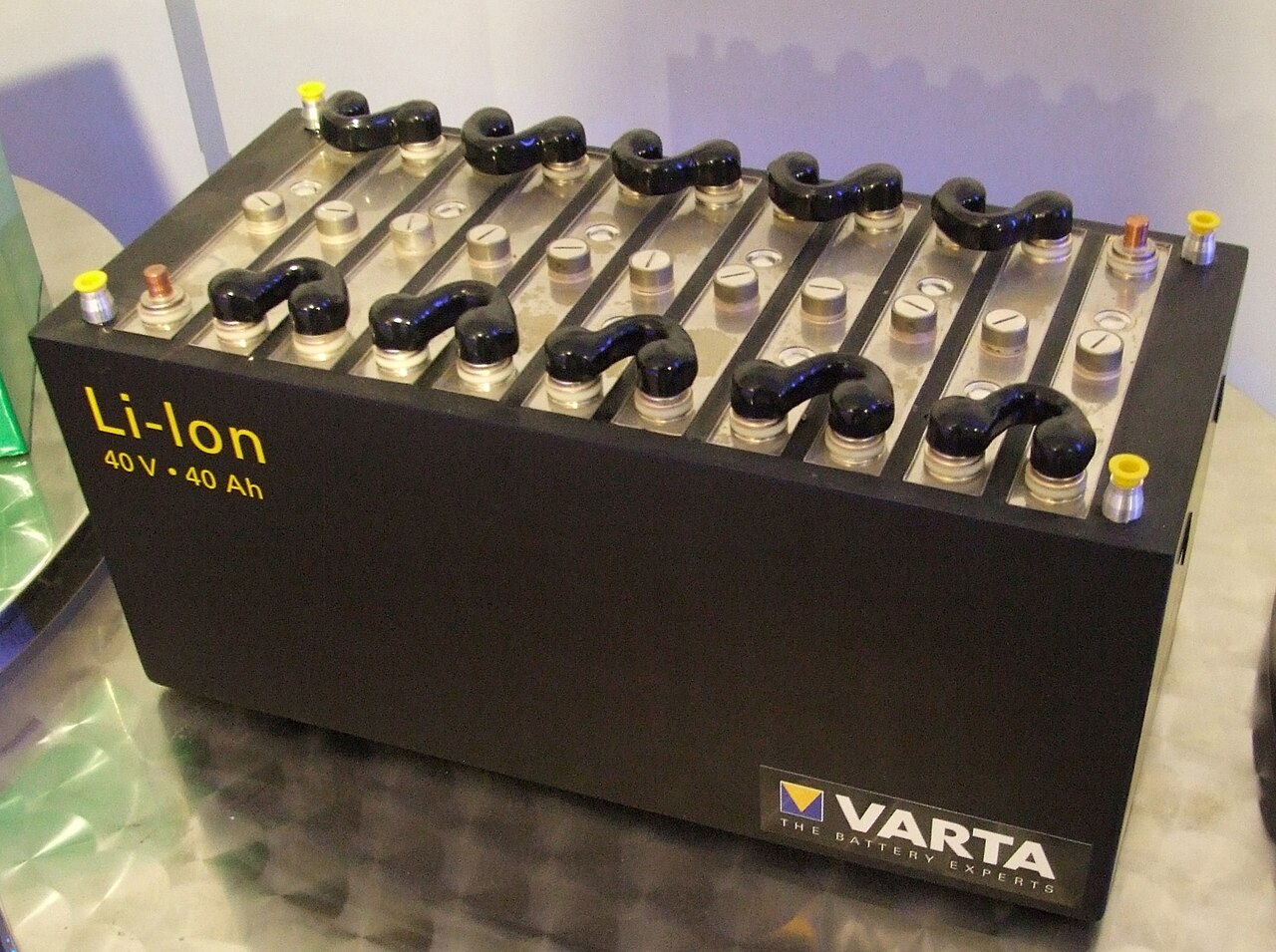
The lithium-ion battery powers most modern portable electronics and electric vehicles, so it is worth understanding on its own.
Lithium is the lightest metal and is very good at giving up electrons, which means lithium-ion cells store a large amount of energy for their weight — their energy density is high. That is why your phone can be slim and still last all day.
In a lithium-ion cell, lithium ions shuttle back and forth between the two electrodes through the electrolyte:
- When discharging (powering your device), lithium ions move from the negative electrode to the positive one, and electrons flow through your device.
- When charging, an external power source pushes the lithium ions back the other way, ready to be used again.
This reversible shuffle is what allows hundreds of charge cycles. It is also why lithium-ion is central to how electric cars work and to storing power from renewable energy sources such as solar and wind.
A note on safety: lithium-ion batteries store a lot of energy in a small space, so damaged, faulty or overheated cells can occasionally catch fire. Use the correct charger, avoid crushing or puncturing batteries, and stop using any that are swollen or damaged.
Why recycling batteries matters
Batteries contain valuable materials — including metals such as lithium, cobalt, nickel and lead — as well as substances that can be hazardous if they leak. For both reasons, batteries should never go in your general waste or household recycling bin, where they can also spark fires in collection lorries and sorting plants.
Instead:
- Use battery recycling points, commonly found in supermarkets, shops and recycling centres.
- Keep terminals of larger batteries covered with tape to prevent short circuits.
- For built-in or vehicle batteries, follow the retailer's or local authority's take-back guidance.
Recycling recovers useful metals and keeps harmful materials out of the environment, which matters as battery use grows. It is one small habit that supports a lower carbon footprint overall.
The bottom line
A battery works by converting stored chemical energy into electricity: reactions at two electrodes push electrons through your device while ions move through the electrolyte inside. Single-use batteries are discarded when flat, while rechargeable ones — led by lightweight, high-capacity lithium-ion cells — can be recharged many times by reversing the reaction. Because they contain valuable and sometimes hazardous materials, batteries should always be recycled at proper collection points rather than thrown away.
Frequently asked questions
How does a battery actually produce electricity?
Inside a battery, a chemical reaction at the negative electrode releases electrons, while the positive electrode accepts them. When you connect the two through a device, electrons flow through the circuit as an electric current, powering the device, while ions move through the internal electrolyte to balance the charge.
What is the difference between rechargeable and single-use batteries?
Single-use, or primary, batteries use reactions that cannot easily be reversed, so they are discarded when flat. Rechargeable, or secondary, batteries use reactions that can be reversed by passing electricity back through them, letting you use them many times.
Why are lithium-ion batteries so common?
Lithium is very light and stores a lot of energy for its weight, so lithium-ion batteries pack high energy into a small, light package and can be recharged hundreds of times. That makes them ideal for phones, laptops and electric vehicles.
How should I dispose of old batteries?
Do not put batteries in your general waste or recycling bin, where they can cause fires. Use battery recycling collection points, often found in supermarkets and shops, and check local guidance for larger or built-in batteries.



Join in — free. Comments on Daily Junction are for members, so real names stay rare and bots stay out.
One field. We email you a 6-digit code — no password needed. Your comment is kept while you do it.
Under 13? You’ll need a parent’s OK first — it takes them one click.