
Squeeze a lemon and your mouth puckers at the sourness. Dab a bee sting with baking soda and the relief is real. Test your garden soil and the packet tells you whether to add lime. All of these everyday moments are governed by a single measurement that chemists rely on constantly: pH. It is one of the most quietly important numbers in science, shaping our food, our cleaning products, our gardens and even the chemistry inside our own bodies. This guide explains what pH is, what the numbers mean, and why they matter.
What it is
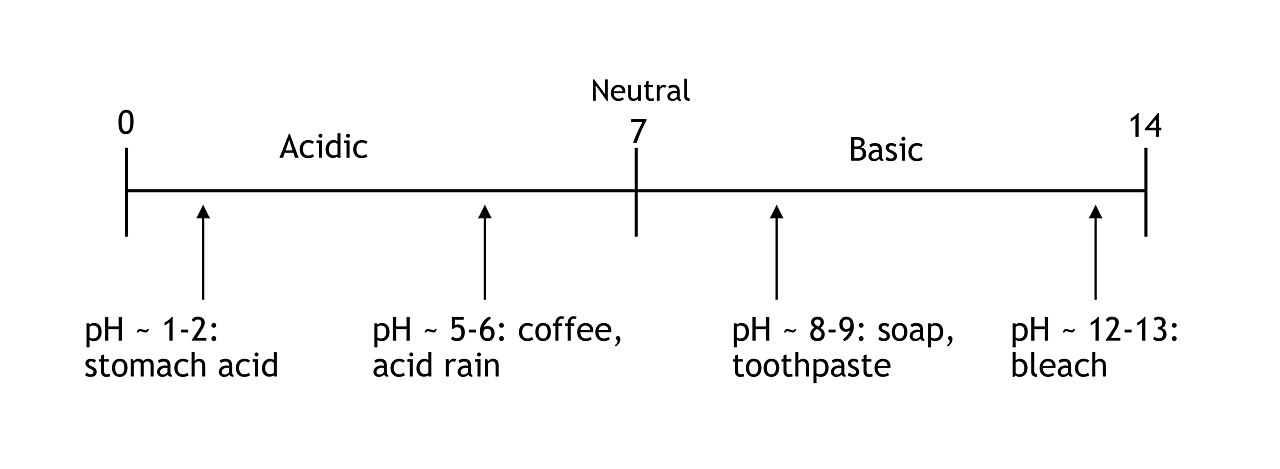
pH is a scale from 0 to 14 that measures how acidic or alkaline a water-based liquid is. The lower the number, the more acidic the liquid; the higher the number, the more alkaline. Right in the middle, a pH of 7 is neutral — neither acidic nor alkaline.
So the scale divides neatly into three regions:
- pH below 7 — acidic (think lemon juice, vinegar, stomach acid)
- pH exactly 7 — neutral (pure water)
- pH above 7 — alkaline, also called basic (think soapy water, bleach)
The letters "pH" are usually taken to stand for "potential of hydrogen", and that name is a clue to what is really going on beneath the scale. Like much of chemistry, pH is ultimately about how particles behave and interact, the same theme that runs through what is a chemical reaction.
What pH really measures
Behind the simple scale is a precise idea. pH depends on the concentration of hydrogen ions in the liquid. An ion is simply a particle that carries an electric charge, and hydrogen ions are positively charged.
When a substance dissolves in water and releases lots of hydrogen ions, the liquid becomes acidic and its pH drops. When a substance instead mops up hydrogen ions (or releases their opposite), the liquid becomes alkaline and its pH rises. In short: more hydrogen ions means a lower, more acidic pH; fewer hydrogen ions means a higher, more alkaline pH. Pure water sits in the middle at pH 7, with a balance of charges that makes it neutral. Because this is all about charged particles in a solution, it connects to the wider world of what is electricity, where charge is also the central character.
The scale is logarithmic
Here is the part that trips people up, and it is well worth understanding. The pH scale is logarithmic, which means each whole step represents a tenfold change in acidity.
So a liquid at pH 4 is not just a bit more acidic than one at pH 5 — it is ten times more acidic. Compare pH 4 with pH 6 and the difference is a hundredfold. This is why a small change in pH can matter enormously: dropping from pH 7 to pH 5 represents a hundredfold increase in acidity, even though the numbers look close together.
The reason for using a logarithmic scale is practical. The concentration of hydrogen ions in real liquids varies over an absolutely vast range, and writing those raw figures out would mean juggling enormous and tiny numbers. The pH scale compresses that huge range into the friendly span of 0 to 14, which is far easier to use and compare.
Some everyday examples
Putting familiar substances on the scale makes pH much more concrete. The exact figures vary, but the rough positions are well established:
| Substance | Approximate pH | Type |
|---|---|---|
| Stomach acid | 1-2 | Strongly acidic |
| Lemon juice | 2 | Acidic |
| Vinegar | 3 | Acidic |
| Black coffee | 5 | Mildly acidic |
| Pure water | 7 | Neutral |
| Baking soda solution | 9 | Alkaline |
| Soapy water | 10 | Alkaline |
| Bleach | 13 | Strongly alkaline |
Notice how many everyday foods sit on the acidic side, while most cleaning products are alkaline. That is no accident: acids and alkalis are good at different jobs, which is exactly why we use them where we do.
How pH is measured
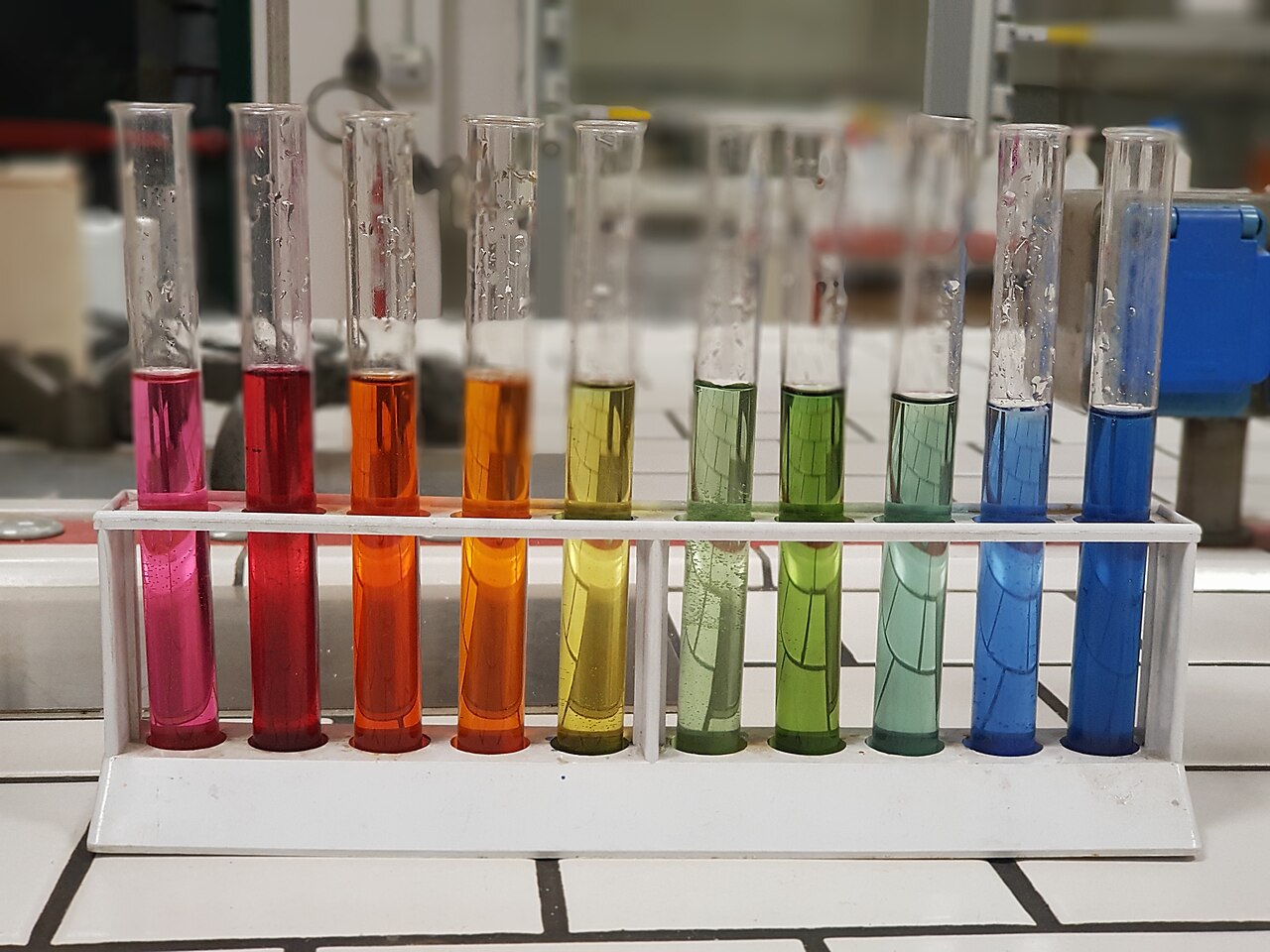
There are two common ways to find a liquid's pH. The simplest uses an indicator — a substance that changes colour depending on acidity. Litmus paper turns red in acid and blue in alkali, while universal indicator runs through a whole rainbow, from red at the acidic end to purple at the alkaline end, letting you read off an approximate number from a colour chart. You may remember dipping strips into beakers in school science lessons.
For greater precision, scientists use an electronic pH meter, a device with a probe that is dipped into the liquid and gives a numerical reading on a display. Both methods are used widely, from the laboratory bench to the side of a swimming pool. The careful, repeatable way pH is measured is a small example of the tested, evidence-based approach that runs through all of science.
Why pH matters in everyday life
pH is far more than a classroom curiosity; it has real consequences across daily life:
- Gardening. Plants thrive at particular pH levels. Many vegetables prefer slightly acidic to neutral soil, while plants such as blueberries and rhododendrons demand acidic conditions. Gardeners test their soil and add lime to raise pH or specific feeds to lower it.
- Swimming pools. Pool water must be kept in a narrow pH band so that the disinfectant works properly and the water does not irritate swimmers' eyes and skin.
- Cooking and food. Acidity affects taste, texture and safety. The sharpness of citrus, the tang of yoghurt and the preserving power of vinegar in pickles all come down to pH.
- Cleaning. Many cleaners are deliberately alkaline to cut through grease, while limescale removers are acidic to dissolve mineral deposits.
- The human body. Your blood is held within a remarkably tight, slightly alkaline pH range, and your stomach is strongly acidic to help digest food. The body works hard to keep these levels stable.
That last point deserves a note of caution. This is general scientific information, not medical advice. Claims about "alkaline diets" changing your blood pH are not supported by mainstream science, because the body tightly regulates its own pH regardless of food. For anything concerning your health, speak to a qualified professional rather than relying on pH-based health claims.
The bottom line
pH is a scale from 0 to 14 that measures how acidic or alkaline a water-based liquid is, with below 7 acidic, 7 neutral and above 7 alkaline. Underneath the number lies the concentration of hydrogen ions: more of them means a lower, more acidic pH. Because the scale is logarithmic, each step is a tenfold change, so small-looking differences can be huge. From lemon juice to bleach, soil to swimming pools, and the carefully balanced chemistry of your own body, pH quietly governs an enormous range of everyday life — which is why a single number from 0 to 14 turns out to be one of chemistry's most useful tools.
Frequently asked questions
What does pH actually measure?
pH measures how acidic or alkaline a water-based solution is, based on the concentration of hydrogen ions in it. A high concentration of hydrogen ions gives a low pH and an acidic solution, while a low concentration gives a high pH and an alkaline one. The scale runs from 0 to 14, with 7 being neutral.
What is the difference between acidic and alkaline?
Acidic solutions have a pH below 7 and a high concentration of hydrogen ions; examples include lemon juice and vinegar. Alkaline solutions, sometimes called basic, have a pH above 7 and a low concentration of hydrogen ions; examples include soapy water and bleach. A pH of exactly 7, such as pure water, is neutral, neither acidic nor alkaline.
Why is the pH scale logarithmic?
Because the concentration of hydrogen ions in liquids varies over an enormous range, a logarithmic scale keeps the numbers manageable. Each step of one pH unit represents a tenfold change in acidity. So a liquid at pH 4 is ten times more acidic than one at pH 5 and a hundred times more acidic than one at pH 6.
How is pH measured?
The simplest method uses an indicator such as litmus paper or universal indicator, which changes colour depending on the pH. For more accurate readings, scientists use an electronic pH meter with a probe placed in the liquid. Both approaches are widely used in laboratories, gardening, pools and food production.



Join in — free. Comments on Daily Junction are for members, so real names stay rare and bots stay out.
One field. We email you a 6-digit code — no password needed. Your comment is kept while you do it.
Under 13? You’ll need a parent’s OK first — it takes them one click.