
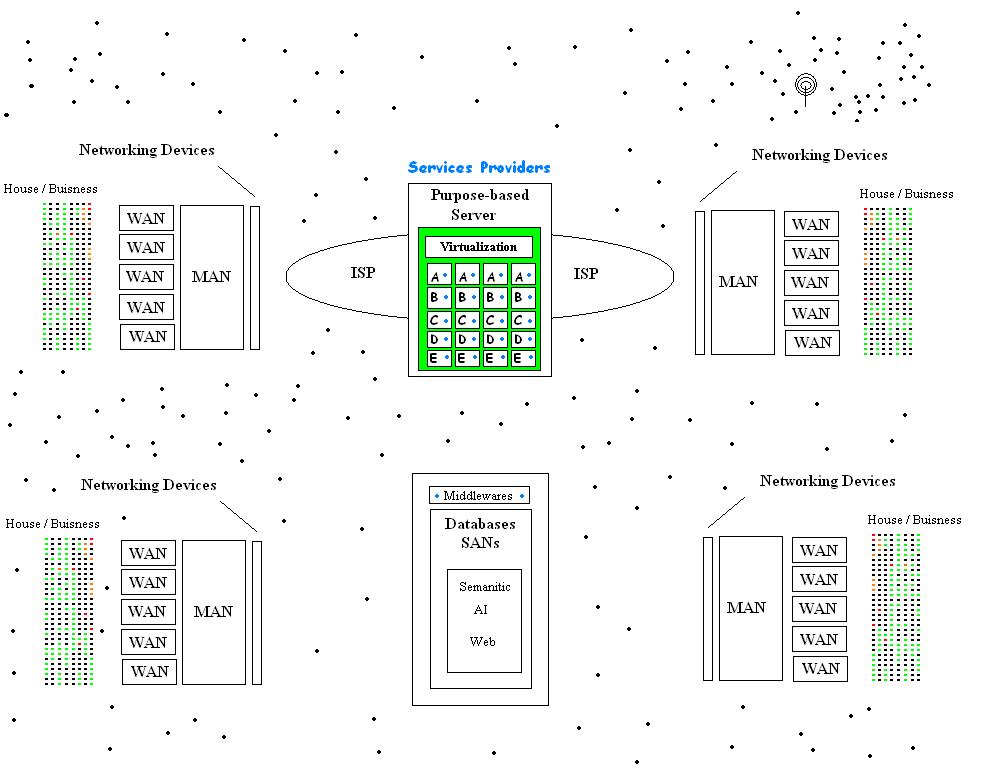
We store photos "in the cloud," run businesses "in the cloud" and stream films "from the cloud." The word is everywhere, yet the cloud itself can feel vague and abstract. The reality is refreshingly down to earth.
Here is what cloud computing actually means.
What the cloud really is
Cloud computing means using computing resources — such as servers, storage, databases and software — over the internet, instead of owning and running the hardware yourself.
The simplest way to think about it is this: the cloud is someone else's computers. Somewhere, in large buildings called data centres, a provider runs vast numbers of servers. When you use the cloud, you are renting a slice of that capacity over the internet and paying for what you use, rather than buying and maintaining machines of your own.
That shift — from owning hardware to renting it on demand — is the whole idea. Everything else is detail.
Why this changed how technology works
Before the cloud, an organisation that wanted to run software had to buy physical servers, find somewhere to put them, power and cool them, and hire people to keep them running. That meant large upfront costs and guesswork about how much capacity to buy.

Cloud computing turns that model on its head. Capacity becomes a service you switch on when you need it and off when you do not, much like electricity from a utility. This is why startups can launch worldwide services without owning a single server, and why big companies can handle sudden spikes in demand.
The three main service models
Cloud services are usually grouped into three layers, often summarised as IaaS, PaaS and SaaS. They differ in how much the provider manages versus how much you do.
- IaaS (Infrastructure as a Service). The provider supplies raw building blocks: virtual servers, storage and networking. You install and manage everything on top, from the operating system to your applications. This offers the most control and the most responsibility.
- PaaS (Platform as a Service). The provider supplies a ready-made platform for building and running software. You focus on your application and data, while the provider handles the servers, operating system and much of the plumbing underneath.
- SaaS (Software as a Service). The provider supplies finished software you simply use through a browser or app. Web-based email, document tools and streaming services are everyday examples. You manage almost nothing technical.
A common analogy is transport. IaaS is leasing a car: you drive and maintain it. PaaS is a taxi: you choose the destination, someone else drives. SaaS is public transport: you just hop on a service that already runs.
The benefits
The appeal of the cloud comes down to a handful of practical advantages:
- Pay for what you use. Costs scale with actual usage, avoiding big upfront hardware purchases.
- Scalability. You can add or remove capacity quickly as demand rises and falls.
- Less maintenance. The provider handles much of the hardware upkeep, power and physical security.
- Reach and reliability. Large providers run data centres around the world, helping services stay fast and available.
The trade-offs
The cloud is powerful, but it is not free of downsides, and the honest picture includes real trade-offs.
Moving to the cloud does not remove responsibility; it changes it. The provider secures the building and the hardware, but you still own how your data and accounts are configured.
Things to weigh include:
- Ongoing cost. Renting forever can, over time, cost more than owning — and bills can grow in surprising ways if usage is not watched.
- Dependence. You rely on both the provider and your internet connection. An outage at either end can disrupt your access.
- Vendor lock-in. Designing tightly around one provider's tools can make moving elsewhere later difficult and expensive.
- Shared security responsibility. Many breaches come not from the provider failing but from customers misconfiguring their own settings, such as leaving storage open to the public.
The bottom line
Cloud computing is simply using computers and software that someone else owns and runs, delivered over the internet and paid for as you go. The three service models — IaaS, PaaS and SaaS — describe how much you manage yourself versus how much the provider handles for you.
The cloud offers real flexibility, speed and savings, but it comes with ongoing costs, dependence on others and a security role you cannot hand off entirely. Used thoughtfully, it is less a magical place in the sky and more a practical, rented engine room for the modern internet.
Frequently asked questions
What is cloud computing in simple terms?
It is renting computing power, storage and software over the internet from a provider that owns and runs the hardware. Instead of buying and maintaining your own servers, you use theirs on demand and pay for what you consume.
What is the difference between IaaS, PaaS and SaaS?
IaaS gives you raw building blocks like virtual servers and storage to manage yourself. PaaS provides a ready-made platform so you can build and run software without managing the underlying servers. SaaS is finished software you simply use, such as web-based email.
Is the cloud more secure than my own servers?
It can be, because major providers invest heavily in security, but it is a shared responsibility. The provider secures the infrastructure, while you remain responsible for configuring your accounts, access and data correctly.



Join in — free. Comments on Daily Junction are for members, so real names stay rare and bots stay out.
One field. We email you a 6-digit code — no password needed. Your comment is kept while you do it.
Under 13? You’ll need a parent’s OK first — it takes them one click.