

Few technology words have been stretched as far as "blockchain." It has been attached to currencies, art, supply chains and grand promises to remake the internet. Strip away the hype, though, and the core idea is a single, surprisingly simple one: a way to keep a shared record that no one party can quietly rewrite.
Here is what a blockchain actually is, and what it is not.
What a blockchain is
A blockchain is a shared, append-only ledger — a record of transactions or data that is copied across many computers and linked together so that earlier entries are extremely difficult to change.
Picture a notebook that thousands of people each hold an identical copy of. Whenever a new page is filled, everyone updates their copy at the same time, and every new page is stamped with a code derived from the page before it. To forge an old entry, you would have to rewrite that page and every page after it, on most copies in the world, faster than everyone else is adding new ones. In practice, that is close to impossible.
That combination — many copies, strict ordering, and tamper-evident links — is the whole trick. Everything else is detail.
How the chain holds together
The "chain" in blockchain is not a metaphor. Data is grouped into blocks, and each block is joined to the one before it using cryptography.
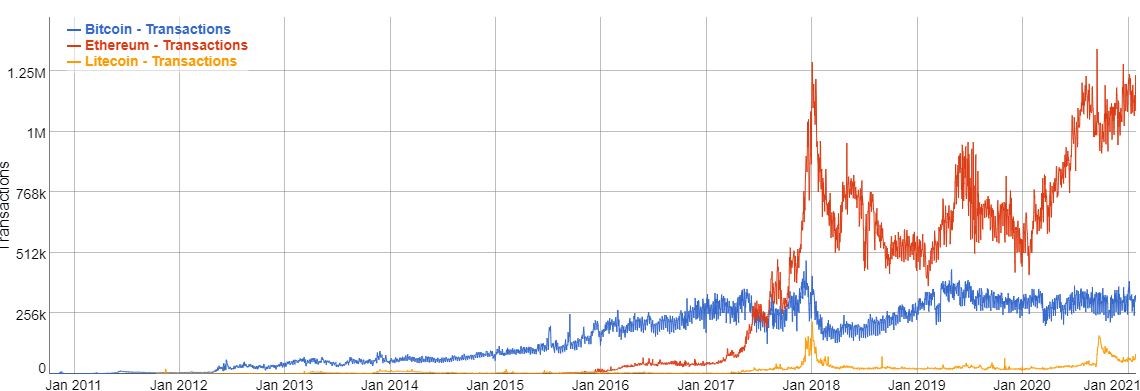
The key tool is a hash: a mathematical function that turns any input into a short, fixed-length string of characters, its digital fingerprint. Change even one character of the input and the fingerprint changes completely.
- Each block contains its batch of data, a timestamp, and the hash of the previous block.
- Because every block carries the fingerprint of its predecessor, the blocks form an ordered chain.
- Altering an old block changes its hash, which breaks the link in the next block, and the next, and so on — making tampering immediately visible.
The breakthrough is not secrecy. Many blockchains are fully public. The breakthrough is making the history almost impossible to rewrite without everyone noticing.
Reaching agreement without a boss
If everyone keeps their own copy, who decides which new block is the real one? This is where consensus mechanisms come in — the shared rules participants follow to agree on the next block.
Two common approaches are:
- Proof of work. Computers compete to solve a hard mathematical puzzle; the winner adds the next block. Solving the puzzle is deliberately expensive, which deters cheating but consumes a great deal of electricity. Bitcoin uses this method.
- Proof of stake. Participants lock up, or "stake," some of their own holdings for the right to validate blocks, and lose them if they cheat. This uses far less energy and now underpins several major networks.
The point of both is the same: let strangers who do not trust each other converge on one shared version of the truth, without a central authority refereeing.
Public versus private blockchains
Not all blockchains are open to the world.
| Type | Who can join | Typical use |
|---|---|---|
| Public (permissionless) | Anyone | Cryptocurrencies, open networks |
| Private (permissioned) | Approved members only | Business consortia, internal records |
Public chains maximise openness; permissioned ones trade some of that openness for speed, privacy and control, and are what many businesses actually experiment with.
Uses beyond cryptocurrency
Cryptocurrency was the first big use of blockchain, but it is far from the only one. The technology suits situations where several parties need to share a record none of them fully controls. Understanding the underlying ideas matters as much as following the headlines — a habit that also helps with media literacy when reading the news.
- Supply-chain tracking. Each step a product takes — farm, factory, shipper, shop — can be logged, helping verify provenance and spot counterfeits.
- Digital identity and credentials. Qualifications or records can be issued in a way that others can verify without phoning the issuer, a cousin of the goals behind biometric authentication.
- Smart contracts. Small programs stored on a blockchain that run automatically when conditions are met, used to automate payments or agreements.
- Record-keeping. Some governments and institutions are testing blockchains for property registers and other records that benefit from a tamper-evident history.
Like other fast-moving fields such as machine learning, the genuinely useful applications tend to be narrower and less glamorous than the early promises.
The limits and trade-offs
A blockchain is a tool, not magic, and an honest account includes real drawbacks.
- Speed and scale. Updating thousands of copies and reaching consensus is slow compared with an ordinary database. Many networks handle only a modest number of transactions per second.
- Energy use. Proof-of-work systems consume large amounts of electricity, prompting the shift toward greener alternatives.
- "Garbage in" still applies. A blockchain can guarantee a record has not been altered, but it cannot guarantee the data was true when it was entered.
- Irreversibility and key loss. The same permanence that prevents tampering also means mistakes are hard to undo, and losing the private key that controls an account can mean losing access forever.
- It is often overkill. When one trusted organisation can simply run a normal database, a blockchain usually adds cost and complexity for no real benefit.
Central banks and regulators, including the Bank of England, have studied the technology closely precisely because its strengths and limits both matter for how money and records might work in future.
The bottom line
A blockchain is a shared, ordered, tamper-evident ledger spread across many computers, held together by cryptographic links and shared rules for agreeing what counts as valid. Its real value is letting parties who do not fully trust one another keep a common record without a central authority in charge.
That is genuinely useful for some problems and pure overhead for many others. The technology is powerful, but it is slow, sometimes energy-hungry, and only worth the trouble when the absence of a trusted middleman is the actual problem you are trying to solve.
Frequently asked questions
What is a blockchain in simple terms?
It is a shared list of records, called blocks, that is copied across many computers and linked in order. Each new block locks in the ones before it, so changing an old record would mean redoing everything after it on most copies at once, which is impractical.
Is blockchain the same as Bitcoin?
No. Bitcoin is one application built on a blockchain. The blockchain is the underlying method of keeping a shared, tamper-resistant ledger; cryptocurrencies are just one of many things you can record on one.
Why do people say blockchains are decentralised?
Because no single company or server holds the only copy. Many participants each keep a full copy and follow shared rules to agree on what is valid, so there is no central gatekeeper that can quietly alter the record.
Are blockchains completely secure?
The shared ledger itself is very hard to tamper with, but the wider system is not foolproof. Exchanges, software, smart contracts and the keys that control accounts can all be attacked or lost, and a stolen key can mean stolen funds.
Join in — free. Comments on Daily Junction are for members, so real names stay rare and bots stay out.
One field. We email you a 6-digit code — no password needed. Your comment is kept while you do it.
Under 13? You’ll need a parent’s OK first — it takes them one click.