

A few years ago, the idea of pointing your phone at an empty corner and seeing a sofa appear there — to the exact scale, casting a shadow — would have sounded like science fiction. Today it is a routine feature of furniture shopping apps. That is augmented reality, and it has slipped into daily life so smoothly that most people use it without knowing the name. This guide explains what augmented reality is, how it works, and why it is more than just a novelty.
What it is
Augmented reality, usually shortened to AR, is technology that overlays digital images or information onto your view of the real world, which you can still see. A label might float beside a landmark, a virtual character might appear to stand on your desk, or an arrow might point down the street to guide you.
The key word is augmented — added to. AR does not replace reality; it enhances it. You are still looking at your actual surroundings, but with an extra digital layer placed on top, anchored so it appears to belong in the scene.
AR versus VR: the crucial difference
Augmented reality is often confused with virtual reality (VR), but they are opposites in an important way.
- Augmented reality keeps the real world visible and adds digital content to it. You see your living room, plus a virtual sofa within it.
- Virtual reality replaces the real world entirely. A headset blocks your surroundings and immerses you in a wholly simulated environment — a mountaintop, a spaceship, a meeting room that does not exist.
A simple way to remember it: AR enhances the world in front of you, while VR substitutes a new one. There is also a middle ground sometimes called mixed reality, where digital objects both appear in your space and interact with it, reacting to walls, tables and your movements.
How augmented reality works
For AR to place a digital object convincingly into the real world, a device must first understand that world. This happens in a few steps, usually in a fraction of a second:
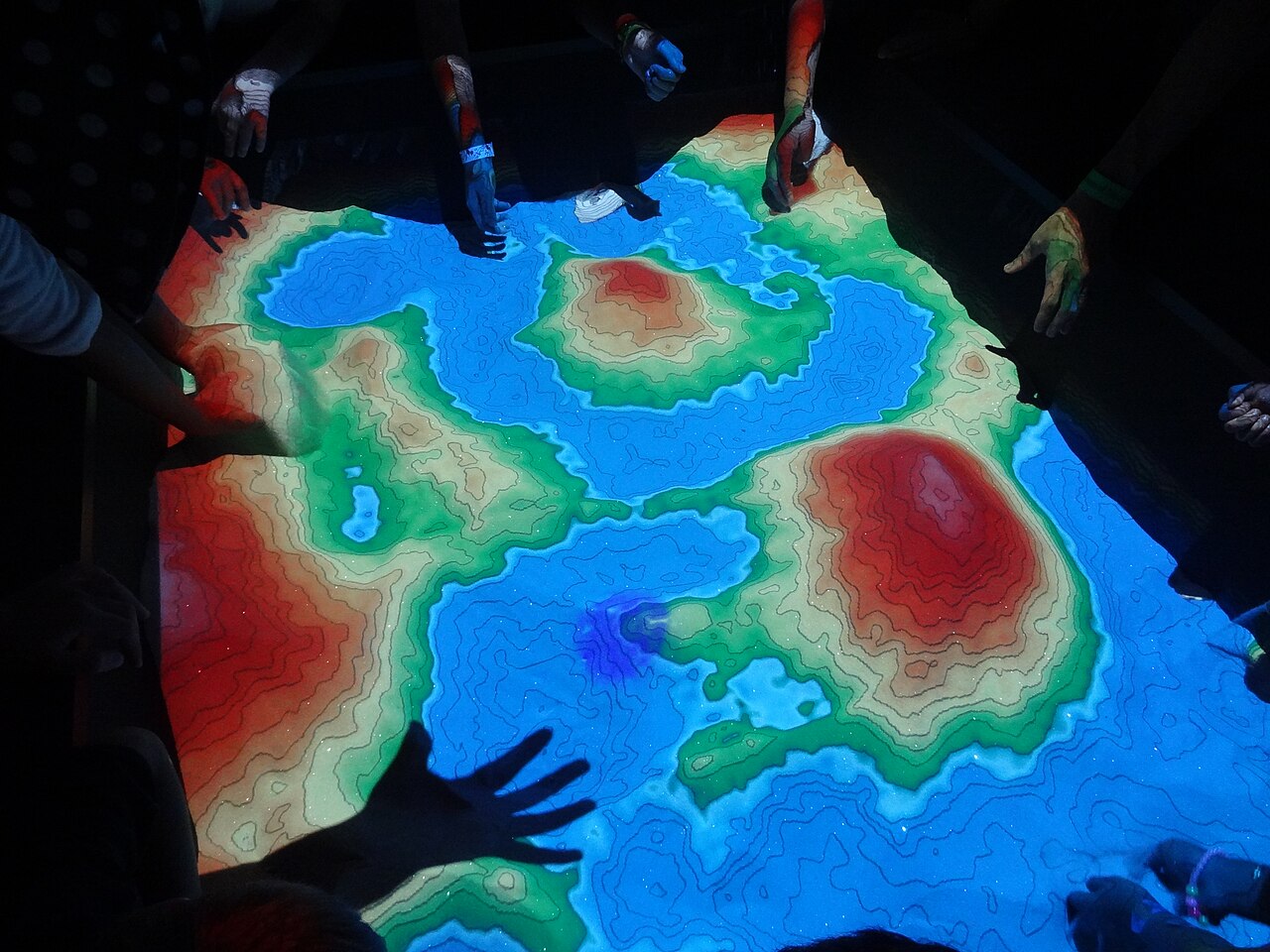
- Sensing. The device uses its camera and sensors — such as the accelerometer, gyroscope and sometimes depth sensors — to capture your surroundings and track how the device is moving.
- Mapping. Software analyses the camera feed to work out the geometry of the scene: where surfaces, edges and floors are, and how far away things sit.
- Placing. The digital content is positioned within that mapped space and rendered onto the screen so it appears to occupy the real environment.
- Tracking. As you move, the device continuously updates the content's position and size, so the virtual object stays put and behaves as if it were really there.
The result depends on translating what the camera sees into something the screen can display convincingly — a process not unlike how the human eye and brain combine signals into a single, stable picture of the world.
Where you already use it
AR is far more common than many people realise. You have very likely used it already:
- Camera filters. Face filters in social and messaging apps that add masks, glasses or animal ears are AR, tracking your features in real time.
- Navigation. Some map apps overlay big directional arrows onto a live camera view of the street, so you simply follow them.
- Shopping. Retailers let you preview furniture in your room, makeup on your face, or glasses on, before you buy.
- Games. Titles that place characters and objects into your real surroundings, viewed through your phone, popularised AR for millions.
- Information overlays. Apps that identify stars in the night sky or translate signs by pointing your camera at them.
Most of this runs on an ordinary smartphone — no special hardware required, which is a big reason AR has spread so quickly.
Beyond entertainment
It is easy to dismiss AR as a toy, but its most valuable uses are often serious and practical:
- Healthcare. Surgeons can overlay scans and 3D models onto a patient during operations, and trainees can practise on virtual anatomy.
- Manufacturing and repair. Engineers see step-by-step instructions, wiring diagrams or hidden components superimposed onto the machine in front of them, reducing errors.
- Education. Students can explore a beating heart, a historical scene or a molecule rendered in their own classroom.
- Retail and design. Architects and customers can visualise buildings, kitchens or products at full scale before anything is built.
These uses share a theme: AR puts the right digital information exactly where it is needed, in the real-world context, rather than on a separate screen you must look away to consult.
The devices
AR runs on a spectrum of hardware:
- Smartphones and tablets are the most common AR devices, using their screen as a window onto the augmented world.
- AR glasses and headsets are the advanced, projecting content into your field of view so your hands stay free. These are advancing fast but remain pricier and less widespread.
For now, the phone in your pocket is the everyday AR machine, while glasses hint at where the technology is heading.
The challenges ahead
AR is promising but not without hurdles. Convincing, lightweight glasses are hard to engineer, battery life is demanding, and accurately mapping complex spaces in real time is computationally heavy. There are also genuine questions about privacy, since AR devices may constantly scan and record the environment around them — concerns that overlap with wider debates about responsible technology and how products handle the data they capture.
As with any new medium, thoughtful design matters too; well-built AR experiences follow the same instinct as good responsive design, adapting gracefully to the device and context they find themselves in.
The bottom line
Augmented reality overlays digital images and information onto the real world you can still see, in contrast to virtual reality, which replaces the world entirely. It works by using a device's camera and sensors to understand your surroundings, then placing and tracking digital content within that view. You already use it in camera filters, navigation and shopping apps, while its more serious uses span surgery, manufacturing and education. Still maturing, especially in wearable form, AR is no longer science fiction — it is a quietly growing layer over the everyday world.
Frequently asked questions
What is augmented reality in simple terms?
Augmented reality adds digital things to your view of the real world. Instead of replacing what you see, like a video game world would, it layers extra information or images on top, so a dinosaur might appear to stand in your living room through your phone screen while the room itself stays visible.
What is the difference between AR and VR?
Augmented reality keeps the real world visible and adds digital content on top of it. Virtual reality replaces the real world completely with a fully simulated environment, usually through a headset that blocks out your surroundings. In short, AR enhances reality, while VR substitutes a new one.
Do I need special equipment for augmented reality?
Often not. Most people already experience AR through an ordinary smartphone or tablet, which has the camera and sensors needed. More advanced AR uses dedicated glasses or headsets, but a huge amount of everyday AR runs on devices you already own.
What is augmented reality used for besides games?
Plenty. Retailers let you preview furniture or glasses in your own space, navigation apps overlay directions onto the street ahead, surgeons use AR to visualise scans during operations, and engineers use it for repairs and training. Education uses it to bring diagrams and historical scenes to life.



Join in — free. Comments on Daily Junction are for members, so real names stay rare and bots stay out.
One field. We email you a 6-digit code — no password needed. Your comment is kept while you do it.
Under 13? You’ll need a parent’s OK first — it takes them one click.